Writing Book as Writing Mentor: Reviewing “Every Day I Write the Book” by Amitava Kumar

By Guest Columnist Sophia Basaldua-Sun

Today I’m thrilled to be publishing my review of Every Day I Write the Book by scholar and creative writer Amitava Kumar. Everyday I Write the Book is a text about academic writing for academic writers, which isn’t to say you need to be an academic writer to read the book. Since Kumar is an academic and creative writer this book really speaks to both audiences, with an emphasis on the academic audience. Speaking from experience, I’ve used countless books written by creative writers to improve my writing, and I think the reverse works as well, so without further ado, here is why I find this book to be such a valuable resource as a writer and as a scholar.

Every Day I Write the Book is explicitly written to be the academic version of Annie Dillard’s The Writing Life and Stephen King’s On Writing, the latter being something of a Bible for creative writers. In broad terms, what all three books have in common is that they are a cross between memoir and reflections on writing. Thus, the writing advice is grounded in personal experience and expression. This isn’t an instructional manual for academic writing in the style of Wendy Belcher’s How to Write a Journal Article in Twelve Weeks, (note on the cover “A Report” is playfully crossed out). The comparison to Dillard and King is far more apt. If you’re in search of the concrete this book will frustrate you (though, to be honest, if you’re looking for the concrete in writing instruction most books and blogs will likely frustrate you. However, if you’re looking for a writing companion, a book that offers commiseration regarding the challenges of writing: the loneliness, the uncertainty, the struggle to find the right words or frankly any words whatsoever, this is a book to add to your collection.

I would put this book in the category of writing lifestyle more than genre guidebook. It’s not going to tell you how to follow the formula of academic writing. Instead the book offers daily encouragement toward finding the writing and academic lifestyle that works for you. To this end, Kumar offers his own life as an example and conducts interviews with other creative and scholarly writers to offer insight into the genre and process.

In my opinion, it’s good to study as many examples as possible as you advance in your own writing journey. So, let’s dig into the benefits of this particular writing book and why you should consider adding it to your collection (anyone else have a shelf full of books on writing?).

272553F7-B40F-460C-ADA6-BBC2D5772834.JPG
Photo Courtesy of Sophia Basaldua-Sun

If I were to judge by the synopsis on the back of Every Day I Write the Book, I would assume the book is largely a writing how to. However, as I delved deeper into the book, I began to realize that on a deeper level, the book is a thoughtful provocation and critique of academic writing norms. For that reason I would say where students may choose to add this book to their collection, senior academics have an obligation to read and grapple with Kumar’s critique.

Reflecting on a wide array of writing practices, industries that surround and profit off of academic writing, (journals and accountability coaching), what writing is rewarded, and consistently returning to the subject of race and academia, this book challenges readers inside the Ivory Tower to confront the practices that are often uncritically reproduced within the academy.

As an independent scholar I found, especially toward the end of the book, a lot of catharsis in Kumar’s challenge to the academy. I imagine many graduate students will feel something similar. For new tenure track academics this book could be the reminder you need to stay true to yourself and your voice. There is a chapter Kumar writes about the inspiration he finds in talking to his younger colleagues, who are blazing the trail in being on the tenure track but not capitulating to its structural pressures for conformity. For older faculty I think the provocation is, what can you do for the next generation to recognize that the academic world has changed and so must its conventions?

The book may at times feel like a direct attack, and it may be tempting to toss it away. But, I think for the reader who sits in their own discomfort as Kumar interrogates a formidable range of academic writing topics, the rewards will be well worth the challenges. It undoubtedly lends itself to being reread and is well worth owning a copy.

Sophia Basaldua-Sun, Ph.D., lives in New York and works as an independent scholar. This review was first published on her own website, Maison Metropolitanist, on April 27, 2021, and is reprinted here with permission from the author. The original can be found on Sophia’s website.

Picture of Erika’s (Most Camera-Loving) Cat

For anyone who has been reading Erika’s gorgeous, soul-searching articles of late and wondering: where does she find the balance between inner fire and inner calm that would allow her to write like that, we trust this picture raises far more questions than it will ever answer.

Seriously. #yesallcats

Midweek Teaser, June 6 2021

What are you smirking about, Edith?

What a week it’s been here in the Boiler Room. And if you’re listening to our podcast, you’re extra lucky, because you get a double dose. (If you’re not already listening, fix that. We’re available all over the podcast universe, so you shouldn’t have any trouble finding us on your favorite platform, plus there are links all over this website to our podcast, too.)

First you’ll get part two of our Pride Month Writers’ Round Table (if you want a peek inside the Boiler Room, you should know that there was actually disagreement about “writer’s” vs “writers’” when we were deciding how to name that segment… because that’s just how we are.) More talk about queer lit and what it means to us, and about queer culture and our lives. And if you haven’t already listened to part 1, here it is. 

And if that isn’t enough for you, we’ve got a brand new episode premiering on Saturday. Andrew did a terrific talk (are you surprised, he’s fabulous, right?) on queer literature in partnership with the Port Washington Library. We asked him for “a two-minute dissertation” to share with you and here’s what he gave us:

John Addington Symonds, a Victorian sexologist, during Walt Whitman’s final years, asked Whitman multiple times if his poetry was about men who romantically desired other men. Whitman infamously responded that he sired six children (he didn’t) but that didn’t stop Symonds from claiming Whitman as a homosexual poet. This anecdote serves as the opening for my talk, which asks: why did Symonds turn to literature to define who and what belongs to the category of “homosexuality”? Another question I will address is: what is the state of Queer Literary Criticism in 2020, and why do literary scholars (myself included) return again and again to literature to name/identify queer bodies and spaces? 

We in the Boiler Room have been given a preview of the talk, and are excited to see the rest of it. Erika has already been mining the episode-notes for new things to read. It will definitely be an exciting episode. 
There’s just so much excitement in the Boiler Room right now, too. Adam mentioned our interview with two editors from Broadview Press; we’ve got a fantastic theater critic coming to chat with us soon; and Andrew and Erika are totally kvelling over an impending chat with Lev Raphael, albeit for different reasons: Andrew is super excited to talk Edith Wharton, and Erika is fan-girl-tongue-tied to get to talk to someone whose books were so important in her own coming out experience. Lev Raphael helped her to navigate the idea that her Jewishness and queerness coexist within the same person and are impossible to separate.

And we haven’t even announced our July theme yet… so you’ll have to keep listening and keep reading to find out what we’ve got there.

#ActLoveGive-A Request from Erika

by Erika Grumet

This weekend will mark the fifth anniversary of the shooting at the Pulse nightclub in Orlando, an unimaginable and heartbreaking tragedy targeting our LGBTQ+ family, and in particular BIPOC members of our LGBTQ+ family. We’ll bring you a longer piece about that over the weekend, but I have a request this week, as we lead up to that somber observance.

For the last sixteen years, Orlando has been my adopted hometown. Orlando is so much more than Disney, Universal, and theme parks. It will never be where my roots are, but my children’s roots are here (Florida is the land of the ficus tree, where a branch can put down roots). I am more like a branch, grafted onto a tree, not necessarily rooted, but still somewhat firmly here, and doing what I can to thrive. I have a sort of love/hate thing going with Orlando, but when the mass shooting in Las Vegas happened, I saw an interview with some municipal leader talking about how each time one of these mass shootings happens, the previous city reaches out to lend support…a unique kind of support that can only come from a BTDT situation-dealing with pragmatic things like media, dealing with the clean up, the trauma, the massive crush of funerals, the PTSD, the investigations, all of it. It’s a club no one wants to join but once you’re in, you hold a very special key, and I thought of my own adopted city, Orlando, reaching out to help Las Vegas.

Ever since the first anniversary of the Pulse massacre, June 12 has been known as “Orlando United Day,” and local agencies and organizations have used #actlovegive to encourage people to honor the day. The idea of #actlovegive shouldn’t be restricted to a day, a week, a month or any time-frame. It should be part of our everyday life as members of a human community, one that has a global impact and is much larger than the individual actions that we take. We forget that sometimes. We forget that the little, kind acts are so important. As a member of the Alphabet Mafia and as someone who has adopted Orlando as my home, in spite of how much I hate hashtag activism, I’m going to appeal to you to do a little of your own this week. The hashtag is three words. Act. Love. Give. It doesn’t have to be a grand gesture. Act…take the time to send an email or make a phone call to a legislator and remind that person to vote against the anti LGBTQ+ legislation that has been swamping us in recent months, or to do something to end cash bail and carceral culture, or to improve voting rights. Or thank your legislator for doing the right thing; we all know the senators representing this state won’t. Love…tell someone you haven’t appreciated yet or enough what they bring to your life. Not romantic love necessarily, but the love that allows us to create the communities and families we rely on for support that aren’t ones we are born into. Offer an extra hug if you’re the hugging type. Put that good love energy out into the world. And Give…we don’t all have large budgets for giving, and many of us are struggling. But give what you can. Buy an extra pair of socks or a can of something good and add it to the collection bin for your local agency helping out unhoused people. Add an extra dollar onto the tip when you go to Starbucks. Give a little money to The Trevor Project or your local LGBTQ youth service agency because queer youth have been particularly hard during the pandemic, often having lost their only safe spaces to be themselves and uncover their authenticity.

Take time to honor Pulse, to honor Orlando and to honor Pride Month for me, and remember to #ActLoveGive at least a little, please? It makes the world better for so many people. 

Lake Eola bandshell and fountain in downtown Orlando. The fountain is lit in different colors at night, too, including rainbows for Pride.

That’s it. I’m done with Stradivarius Violins

By Adam Katz

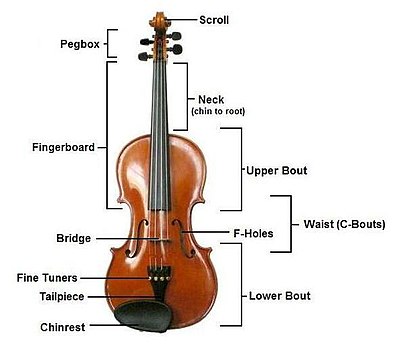
The anatomy of a violin, courtesy of Wikipedia

I have had an odd thought rattling around in the can about Stradivarius violins. I’ve never been a violinist; I don’t remember doing more than picking up with their permission a friend’s violin (or maybe it was a viola) and trying it with the bow. I probably made a sound like a Tuvan throat-singer, and alas, not in a good way. But I have played piano for going on 30 years, and I’ve been a singer for most of that time. I do have a pretty good ear. Not world-class, but pretty good. And it does extend to listening to violin music.

So I feel pretty good about saying that the price-differential between an old Stradivari/Guarneri/Bergonzi violin from 18th century Cremona and a new violin of a comparable level of workmanship… is a scam. Why are we talking about this right now? Because I’ve had to edit pieces all week about people dying of preventable diseases or getting bullied because of their sexual orientation, and I just want to complain about something, and if you wouldn’t mind sitting with me for a moment while I do, then I thank you for the kindness.

You may not know this stuff off-hand so I’ll quickly review it, not least because it’s fascinating: A fellow named Andrea Amati is said to have standardized the shapes of the modern violin, viola, and cello in the mid 1500s. The violins he made are still around, but are no longer widely in use. Over a century later, Antonio Stradivari and his slightly younger contemporary Giuseppe Guarneri (among others) began manufacturing what are considered the definitive violins. Those instruments—such as survive—are played, and, of course, fiercely coveted, to this day. The highest price that was actually paid for one of these instruments, a violin, was more than ten million US dollars. Why so cheap? Because there are hundreds of Stradivarius violins. A Stradivarius Viola, of which there are only ten extant, was put on the market in 2014 for a cool 45 million. It didn’t sell.

One thing that usually gets left out of these conversations, but that I find interesting, is that even if the body of the violin was made in the 17th or 18th century, the rest of the instrument, as a rule, was not. I’d love to nerd out for like 20 or 30 column inches about the specifics, but suffice it to say that the fingerboard of the violin used to be almost parallel with the body, but in the 19th century, the fingerboard was tilted and extended further along the body of the instrument, raising the strings off the instrument, increasing their tension, and allowing string players to make a bigger sound, as well as allowing them to play higher pitches . The design of the body of the instrument is unchanged, but the design of nearly every other part of the instrument is almost unrecognizable. The pegbox and the scroll are, I think, the same, but cellos have been given endspikes, violins and violas have been given comfy chin-rests, and so on.

I review these changes because I find the history compelling in their own right, but also because, if we so unreservedly revere Stradivari and Guarneri and their ilk to the point where people are paying millions for a single instrument, would you not think that their designs would have remained unsurpassed? The virtuoso violist David Aaron Carpenter (and my former high school classmate… God, he was awesome to listen to close up) said of the difference between a Stradivarius instrument and a modern instrument: “If I had to compare it to another field of creation, I’d say it’s like asking an art lover to choose between the ‘Mona Lisa’ and a perfect reproduction of the ‘Mona Lisa.’” But Leonardo’s masterpiece wasn’t updated by some 19th century engineers to make it bigger and brighter. It seems to me that when it comes to altering a Stradivarius so that it will project better in the huge modern auditoriums, at least a dozen considerations are negotiable, but when it comes to selling the Stradivarius, somehow it is still a pristine work of art; a window into a lost world.

All of this would just be kvetching if these violins sounded demonstrably better than their modern peers. But a bunch of scientists eventually did a blind-test in which violinists wearing dark goggles (so they could not see whether they were playing a Stradivarius or a modern instrument) played the same short phrase on two dozen or so different instruments, half of which had been made by Stradivarius. The researchers found that audiences could not tell the difference between the the old instruments and the new, or, at worst, actually preferred the new instruments. The study was conducted in 2014, which, ironically, is the year the viola went on the market for $45 million.

I am, as it happens, a romantic at heart, albeit a disappointed one, and so of course I am fascinated by the lore of the great Cremonese luthiers. Did you know, for instance, that the wood for a violin has to come from a place where the winters are cold, because it’s the coldness of the winters that causes those alternating red-and-yellow grains in the wood, red and tight for winter, yellow and expansive for summer? The grain traditionally runs in straight lines from the top of the instrument to the bottom (or vice versa) and it’s said that the grain helps control how the violin vibrates when the player draws horse-hair to steel-wrapped-nylon. But that bit about the grain may be bullshit as well, because there is more than one way to cut wood to make your violin.

So no, I’m not completely insensitive. But why am I bringing up any of these complaints? What does the myth of the Stradivarius mean in practical terms? Well first, that an old Cremonese instrument might cost ten times what even the best modern instruments would cost. Which effectively means that an elite instrumentalist tends not to own their own instrument, which in turn means the violinist, violist, etc. is beholden to wealthy benefactors and faceless organizations for the use of their instruments. Which in turn raises several questions: what happens to the prestige of the owner when it is demonstrated in a double-blind experiment that their instruments produce an equivalent or slightly inferior sound as compared to the work of modern master-luthiers? So far, the answer is: nothing. But what happens if, as is more common with more pop-oriented musicians, the beneficiary of a corporation’s Stradivarian largesse were to wax political? Are there behavior clauses written into the contracts that stipulate the loan is only good, provided the instrumentalist behave?

I haven’t heard of a wealthy benefactor withdrawing their loan. Is that because the borrower is free to do as they will, political or otherwise, or because they wouldn’t dare jeopardize their relationships? Think this is so far-fetched? Remember when John Cena had to apologize for calling Taiwan a country? The nerve. Referring to a self-governing land-mass as a country. Doesn’t he know that a country is whatever allows him to sell The Fast and the Furious 12: Now with Spaceships and Shit to as many Chinese theatergoers as possible? Cena is not the first, nor will he be the last performer to compromise for the sake of a business relationship. Maybe Tchaikovsky’s violin concerto doesn’t sound different whether the violinist is political or not, but it obviously made a difference to Tchaikovsky, who committed suicide after writing his Sixth Symphony, because his family could not accept his homosexuality.

Goddamnit this was just supposed to be a light piece.

But the point stands. How can you be apolitical and play Tchaikovsky? Maybe your interpretation doesn’t sound political as such; but how can you, for example, travel to Hungary or Poland or Russia or the United States or any of these other vitriolic anti-queer countries and play Tchaikovsky, oblivious of the larger context? I think a performer may be vaguely aware of such things, but may blink at just the right moment in order to keep on performing and making money. And part of that keeping-on is getting to continue to use their prestigious (but not all that exceptional) instrument.

As long as a Stradivari or Guarneri is more than just an instrument; more than the sum of its parts; as long as the myth of the instrument matters more than does the instrument itself, it will also cost more than almost any instrumentalist can afford, and thus will represent a lien on that instrumentalist’s talent by a corporation usually associated with trade, not with music. And that’s not even mentioning how the price of these instruments is driving up the counterfeit market.

Ok. One last thought. Hear me out. If these instruments are so perfect, how is there even a counterfeit market in the first place? Shouldn’t these people who claim to come in their pants the moment they hear the perfection of tone that only a Stradivari is capable of producing be able to tell the true instruments from the fakes? Look at this article on how to sniff out a fake Stradivarius and note how infrequently the writer mentions the purity of the tone as a deciding factor in any determination.

Andrew’s Big Think #2:

“I Don’t Have to Wait for you to Give me the Key.”

By Andrew Rimby

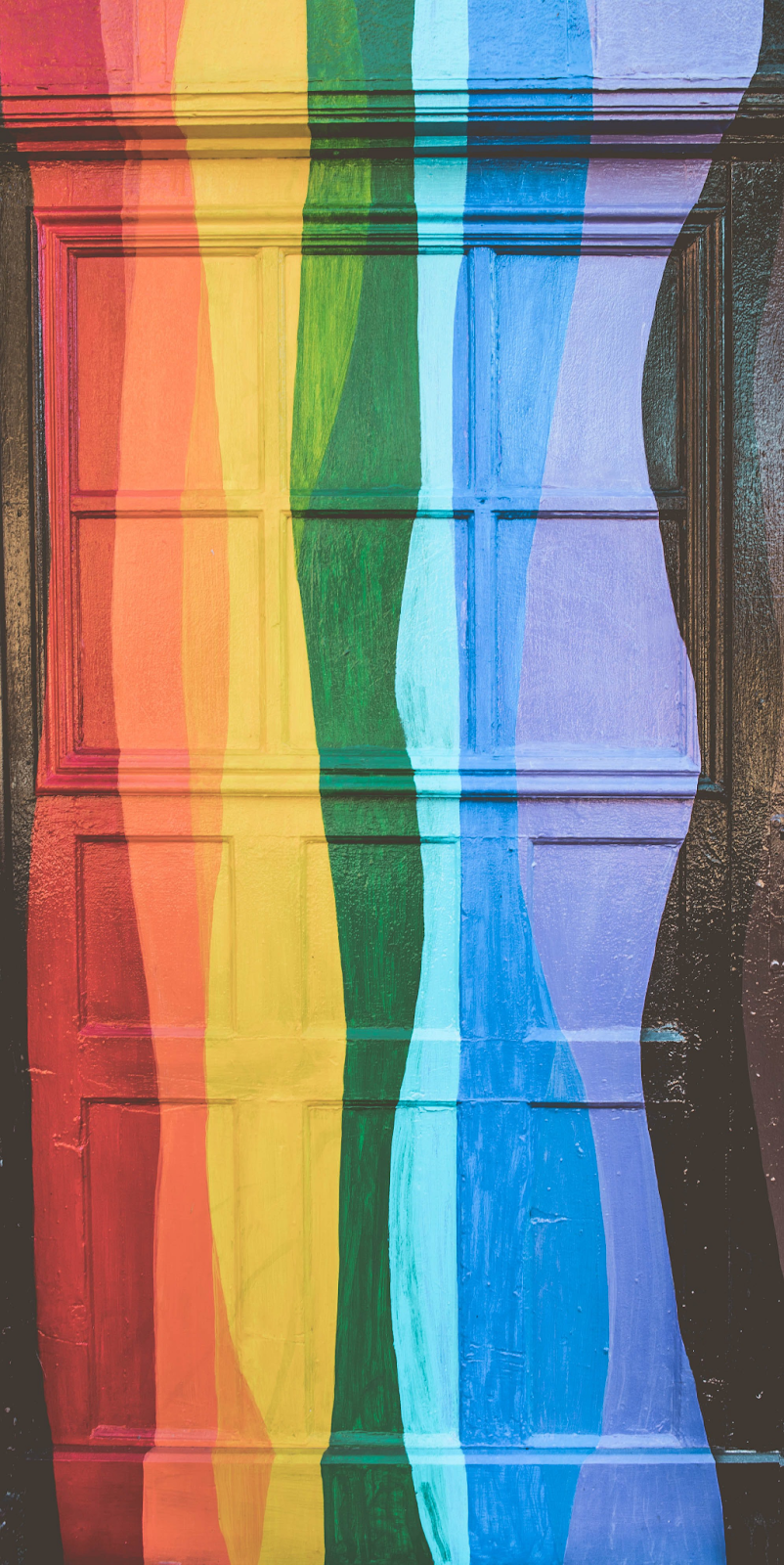
I spoke those words when working through my writer’s block during a Zoom writing session a few weeks ago. When I said this, Tiffany Sowa (fellow contributor) looked at me and said “Andrew, that’s it. That’s where your writer’s block has been stemming from.” It felt so good to speak the writer’s block out loud and to start to realize that it was rooted in the oppression of the closet. A tingling sensation of empowerment started to emanate from me when I said “Tiffany, you’ve helped me voice why I’ve held the key to my own, very openly, queer voice, as an educator, writer, scholar, and performer, all along, and don’t need permission to have access to begin opening the creative doors around me.” Let me explain the analogy between writer’s block and the closet by starting at the beginning… my coming out story.

It was October, 2008, and I had decided that today was the day to voice my attraction for other men. Who should I tell first? That question was swirling in my head for the past year once I began to realize that I was romantically attracted to men (well, at that time the middle school boys in my class). I will always recall that discovering the keywords “gay literature” in my public library was the moment when I first stepped one foot out of the closet. And, this was the same time when I was taking a sex education course, with one of my favorite physical education teachers, who had just discussed how it’s “normal to feel attraction towards the same-sex, so no need to repress or feel uncomfortable with those feelings.” Oh, how I value that experience with my teacher who also showed the class And the Band Played On (a 1993 tv docudrama based on Randy Shilts’s 1987 non-fiction book, currently on HBO Max), and he spent much time discussing how the HIV/AIDS crisis pathologized gay men. It was during that moment that I felt “seen” by my teacher but most importantly, could voice who I was and how I wanted to be free from society’s judgment and pathology. I recently reached out to this teacher, who is now retired, to thank him immensely for helping me through my coming out journey. We had such a nice exchange, and I will always value how he helped normalize my experience (thank you from the bottom of my heart). 

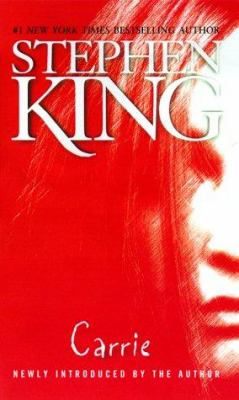
I would find the key to my coming out moment in the place where I always searched for my authentic voice…the public library. While I was recognizing my budding attraction to men in the sex ed classroom, I sought out narratives that explored this desire in the library. So, I set foot in the Margaret Heggan Library (in my hometown in South Jersey), and began to walk around the young adult section, where I analyzed the spines of book covers to figure out what series to start next. By 8th grade, I had gotten to know the young adult section quite well, and going to the public library was and is still a nostalgic memory. Ever since I can remember, but I know it began when I was in preschool, my mother would take me every weekend to the library to pick out “whatever I wanted,” and oh how I loved devouring everything from Shelley Duvall’s Faerie Tale Theater videos to The Magic Tree House series. But, by this time, I was still in the midst (and always will be) of my horror obsession, and so had found Christopher Pike’s young adult novels, but thought, in 7th grade, why not explore that unknown section of the library…adult fiction. It was here where I discovered the fanatical horror aura of Stephen King. Carrie’s cover spoke to me right away, and I was mesmerized by the image of a female face whose hair covered her eye (symbolism of her outsider status). Once I saw this image, I knew that I had begun to find my way out of the oppressive closet that was restraining me.

The Margaret Heggan Library’s edition of Carrie

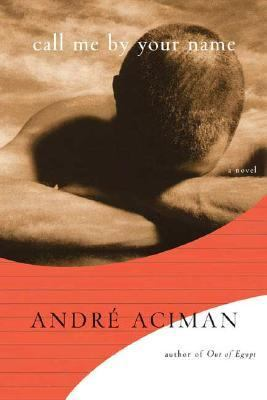
    This was the first key to unlocking the taunts from fellow classmates, mostly boys, who tried to make me feel unmanly and emasculated for being a ballet dancer, actor, singer, and writer. So not only did King’s prose help me connect to Carrie White, who was also figuring out how to process her trauma from being bullied (which deeply resonated with my own), but I began to sense a queerness was inside of me that had to be released. That’s where Aciman’s Call Me By Your Name makes an appearance.

The Margaret Heggan’s edition of Call Me By Your Name

    I didn’t know then that Aciman’s novel had only been released one year before I discovered it, sitting there waiting for me to read as I went to the Jersey Shore (most likely Brigantine or Atlantic City) in need of beach-reads. Well, I discovered something much more than a quick page turner, I found my budding sexuality within Aciman’s lyrical, magical prose. I remember how nervous I was when I typed in “gay literature” (LGBTQ+ Lit. was not yet a search term), and Aciman’s novel came up first (and so many more that I quickly got my hands on…I think the next was Anne Rice’s queer narrative in Interview with the Vampire and then Mary Renault’s The Persian Boy). I slyly looked around, with the book in hand, and went to the checkout desk where I knew all of the librarians since I was a wee toddler. I thought they were going to interrogate my sexuality right there and then, and call my parents. “Your son is checking out an illicit book about two men having an erotic experience with one another.” But no, I was given the usual response… “Andrew, we hope you enjoy this book, and see you again soon.” I have to give a shout out to those at the Margaret Heggan Library who have always been so encouraging of my passionate reading and consuming of new narratives. Well, I quickly read through the book and discovered how closely Elio’s journey was paralleling my own (but I don’t want to spoil that intimate knowledge since I discuss that in my LGBTQ+ talk premiering on the podcast on June 19th…stay tuned). 

    But, back to that moment when I sat down with my parents, around our kitchen table, and declared “Mom, Dad, I really have to open up to you about something.” I thought they were going to respond the way I saw Marco’s father react in Degrassi…where his father tries to ignore Marco’s sexuality and deny acknowledging who his son actually is. But, I received a different response…”Andrew, we thank you for telling us but are you really sure that you are gay, are you sure because we worry about how those around you will try to use your sexuality against you or worse try to bully you every chance they have” (I acknowledge I can’t quite recall the exact wording but when discussing this moment recently with my parents, this was close to what they said). I was adamant about not relinquishing control of my coming out experience, and so was determined to make it clear that I am now out to you, so will no longer step back into that closet. Soon after, I joined our high school’s Gay Straight Alliance (GSA), where I found others in the LGBTQ+ community who embraced one another and offered different intersectional perspectives (for example, how being LGBTQ+ intersects with one’s race, social class, religion, and family’s politics). It was near the end of my high school journey when we had a GSA mixer with other local high schools, and wow, what an affirming experience that was for all of us…to not feel alone in our LGBTQ+ journey. 

    When I came home, after sharing disco fries (such a Jersey diner affair) with my friends, my parents said “you really seem so happy and alive” and I responded “you know, I think I’ve found what makes me truly content in life and that’s being around those who validate those around them.” My parents hugged me and said “we will always support and validate who you are, which is our gay son.” Did it take my parents some time to process my coming out experience? It did, but they have become some of the best LGBTQ+ parental allies I have ever met (and I am biased; they are my parents, and I their only child). Thank you to my mother and father who continue to show up as allies and activists like attending my LGBTQ+ Lit. talks or going to Philadelphia Pride with me. I can’t wait to see where the rest of our journey leads us. 

This was the key of acceptance and validation that gave me access to the creative house that I now reside in… but oh there have been many more keys along my journey that have given me access to the library, the parlor, the dining room, the bedroom, the guest room, but never one to reopen that closet for me. That closet is always there waiting for me…beckoning me to go back into heteronormativity’s embrace, where I can be defined by social norms around me… but as my parents just told me (after our recent vacation) “Andrew you have always marched to the beat of your own drum and helped others figure out their authenticity.” And, I will continue opening up the authentic rooms in my creative home, like the key that I received from Adam and Erika that led me to my Jewish familial roots, or the one that Mary and Bente gave me to speak truth to graduate student concerns, the one my therapist handed me that led me to open up about my sexual assault and find fellow LGBTQ+ survivors to talk with, and the one that my mentors continue to provide me…the one that is engraved with the following message:

“Open the door and you shall find your voice…others will be there on the other side in solidarity.” 

https://www.google.com/url?sa=i&url=https%3A%2F%2Fmedium.com%2Fprismnpen%2Fbehind-my-rainbow-closet-door-one-womans-story-412993d829f&psig=AOvVaw1B1xyVpadwLtd9pd7RhcEe&ust=1622824557952000&source=images&cd=vfe&ved=0CAIQjRxqFwoTCLCS6ejy-_ACFQAAAAAdAAAAABAa

Andrew’s Resources:

(a teaser) 

What’s to come in Part 2 of Andrew’s Big Think? Part 2? Yes! There will be a part 2 on June 30!

As I go back to my dissertation chapter on Whitman’s “Song of Myself” and his homoerotic poetics, I think “who is picking this text up and finding themselves reflected back?” When I return to reading James Davidson’s The Greeks and Greek Love, or even, turn to my pleasure-reading of Brit Bennett’s The Vanishing Half, I continue to ponder “who opens this book and begins to find one key at a time that unlocks their authentic voice?” 

(Podcast Epiode)Pride 2021: Queerness and Allyship-An Ivory Tower Boiler Room Round Table Part I

(Erika, writing on behalf of the Ivory Tower Boiler Room team,)

One of my favorite parts of being part of the Ivory Tower team is getting to sit around with my friends and have the kind of deep, intense conversations like the ones that happen in the middle of the night at summer camp, or sitting around a dorm room in college. This month’s Round Table was no different. I sat down with three people I really enjoy spending time with and got to talk intensely about some topics we all care about, and to really listen and learn from them, and to share my own stories and my own experiences. I hope you enjoy getting to peek in on our conversations, too…just wait until we show you some of our Facebook chats or the aftershow though.

Unsurprisingly, we sit down with a plan and a few questions, and an estimated time frame, and of course, that all is quickly forgotten, so today we bring you part I of our Pride Round Table where we welcome you all to The Ivory Tower Boiler Room’s Pride month celebration and what that means to each of us (Adam, Andrew, Erika, and Mary). We offer our own positionality and explain how we’re checking in during Pride. Then, we get into a discussion about LGBTQ+ media and leave you all hanging on “when each of us discovered LGBTQ+ Lit. as a category.”


You’ll have to wait a little longer to hear more about us and our books though. We do need time to write, too…someone’s got to keep books on the shelves.

As always, here are some links you might want to check out:

Vital Thoughts-a place for short courses taught by experts on all kinds of interesting topics. Andrew will be teaching a two session course on Queer Poetics here this summer.

An Introduction to the Beat Poets-several of us are fans of the Beat Poets. In the roundtable we talk about reading Beat Poetry as some of the earliest “mature content” we read, as well a a little bit about obscenity and how the impression of what it is has changed over time.

Pose on FX-Pose is an excellent show, in it’s third (and sadly, final season) focusing on the Black and Latino gender non-conforming and LGBTQ houses of New York’s ballroom scene of the 1980s and early 1990s. The show touches on topics including chosen family, homophobia, HIV and more, and has made great effort to cast transgender and gender nonconforming performers to play those roles in the show.

Matt Baume’s YouTube Channel-Matt Baume hosts excellent videos about LGBTQ portrayals in media, as well as writing about Geek Culture for Seattle’s “The Stranger” and hosting an entertainment podcast (“Sewers of Paris”) where he talks with gay men about the entertainment that changed their lives.

The Klein Sexual Orientation Grid-Many of us are familiar with the very linear Kinsey Scale, which allows us to consider our sexual orientation along a number line from 0 (totally heterosexual) to 6 (totally homosexual.) The Klein Grid allows us to explore our sexuality based on both behavior and fantasy and to consider our past, our present and our ideal situations. It provides a more in depth, more nuanced picture of what we know about our sexual orientation.

The Sex and Gender Debate-we do discuss sex and gender in this episode, and we are not experts on these topics. We do our best to ensure that any misinformation we hear is corrected during the discussion, but it’s entirely possible we missed something; that happens when there are four of us and we sometimes talk all at the same time. I encourage you to read the information at this link for more accurate and easier to understand or to follow discussion than our conversation may be.

Two poems about HIV/AIDS are mentioned during the roundtable. One is Tim Dlugos’s piece G-9, and the other is sam sax’s (one of my favorite contemporary poets, so I am extra-thrilled to share this with you,) poem On PrEP or on Prayer [“spare us your burial rites”].

Happy listening. Leave us a comment here after you’ve listened, or come visit us on Facebook or Twitter.

Andrew, looking, and feeling especially cute and totally ready to celebrate Pride 2021

The AIDS Epidemic: Fortieth Anniversary: A Personal History

By Erika Grumet

Forty years ago today, the first reports of the “pneumonia” that we would eventually know was AIDS broke. As the most senior member of the Ivory Tower Boiler Room team, and the one with the most experience in HIV and AIDS related topics, (and the one who brought it up during planning in the first place,) writing about it fell to me. I cannot count the number of posts I began and deleted and began and deleted, or the hours I agonized, or tears I cried over what to write. Nothing felt like I was honoring, memorializing, sharing and enlightening in the right balance. 

And then the four of us sat down to record our round table last night. As we were doing that, I shared some of my own stories as one does on a podcast, but the episode itself and all of the writing I’ve done so far this month has been heavy with emotion, and really dug deeply at my core. As we talked and told our stories I shared something from my personal history with HIV, which doesn’t begin 40 years ago, but closer to 35 years ago. AIDS was certainly a word that I had been hearing; I grew up in a house where daily newspaper reading was a part of the routine, where car rides were often filled with the sounds of NPR and where adults were definitely consuming news sometimes without shielding children as much as might have been wise. 

One day, sitting in the waiting room at some doctor’s office, I’d already finished the book I’d brought with me, so I began flipping through magazines. At that point, many magazine articles had begun covering stories about safer sex, and what people could do to try and reduce their risk of contracting HIV. The story I was reading included that information, and mentioned using condoms for oral sex. I was somewhere around ten years old and had a vague idea what a condom was. And so there I am, ten years old, sitting in a chair, in a doctor’s waiting room, feet not touching the ground yet, reading this article in Newsweek, I think, and finding myself incredibly puzzled at the suggestion that one should use a condom for oral sex. I ran my own tongue around my mouth, thought about what a condom looked like, and wondered “How in the world can you get a condom unrolled all the way on your tongue?” I thought oral sex meant French kissing.

I joke with the Ivory Tower team that I am the bringer of Gloom and Doom; and it’s true…Mary writes a lot about crime and Andrew is a Whitman scholar; Adam, in addition to editing our stuff is firmly into 16th and 17th century literature, especially epic poetry (and he is my absolute favorite person to listen to when it comes to talking about Shakespeare) and I write contemporary poetry (mostly) about really dark things it seems… But I have watched HIV transform–as a public health issue, as a political issue, as a social issue. It’s deeply woven into the fabric of my consciousness, in so many shades of red, from angry crimson and frightening blood to soothing and warm mahogany.

My first experiences with AIDS were the frightening, gloom and doom, death and destruction pictures in magazines and on TV: emaciated, dying people looking like the images of the Holocaust victims I had seen, tended by health care workers in HAZMAT gear. So many unknowns. Terrible sad stories, about people rejected by their families, and health care providers afraid to help them, and mostly helpless to do anything other than make them comfortable as they withered away. As a young person, I was swarmed with “Just say no” messages. We had national leadership in the White House and in our Surgeon General who refused to acknowledge what was going on (Ronald Reagan didn’t mention the word “AIDS” in a speech until 1985. Nancy Reagan was only slightly better at encouraging people to talk about it, and even then, Reagan remained uncaring, disengaged and distant at best, really beginning to pay attention only after a heterosexual white woman, Elizabeth Glaser, who contracted HIV through a blood transfusion during the birth of her first child, essentially, the perfect “innocent victim” spoke with him about it. C Everett Koop, the health policy leader, also failed the American people, finally sending out a mailing to all American homes in 1986.) It was through this terrifying and tragic time though, that I was learning that the possibility of queerness existed. Newspapers had to mention the AIDS epidemic. And mentions of the AIDS epidemic had to mention that gay men were the most at-risk population. And I was there just taking all of it in. So in spite of really only seeing images of men loving men, and in spite of everything about it seeming horrifying and tragic, somehow I still extrapolated the idea that loving relationships between women were possible. 

As the late 80s and early 90s unfolded, the virus that causes AIDS was discovered, and tests allowing people to know when they had HIV became possible. And eventually, although the side effects were brutal, medications became available to help control the virus, allowing people to survive and thrive with HIV for longer and longer periods of time, living fuller and fuller lives. And in my own life, I discovered those incredible feelings for other people–the feelings that make you confused and warm and tongue tied. Everything around me had always told me that having those feelings about boys was “normal.” But I definitely had those tingling feelings about people who weren’t boys…and I did everything possible to squash them, to hide them, to not share them or tell them to anyone, even conducting an entire summer camp romance without friends finding out. Later, I met the first person with HIV who became part of my life, I began my work as a peer educator, conducting peer to peer programming about HIV (which would lead me to incredible volunteer opportunities, and eventually my decision to earn an MSW and to work in public health, doing HIV/STI testing and prevention and sexual health work with adolescents and young adults.) And suddenly, we began seeing red ribbons everywhere, and people were talking more and more.

It seemed to become a rite of passage among sexually active young adults to get your first HIV test at some point… on the same level with giving blood for the first time at a high school blood drive. There would be some event at the university, or something would happen, and you would go together, maybe in a small group, and go through the pre-HIV testing ritual of explaining your history, why you were there, talking about harm reduction, having blood drawn, being handed a stack of condoms, and getting sent on your way to wait a week or two for your results, the ominous possibility lurking in the back of your head, but, still holding onto the idea that you were young, healthy and invincible.

My turn came late in 1994. I could probably have ignored the possibility for a while longer; my involvement with prevention work had made me kind of compulsive about making safer choices (although it didn’t stop me from enjoying myself with people who were in various places along the gender and sexuality spectrum,) but in the fall of 1994, I was raped. No sexual assault victim or survivor should ever feel forced to report the crime to authorities, or to go through the experience of having a rape kit done, and all of the associated medical and legal processes, and I made the choices that felt right to me at the time, but whatever that survivior chooses, there are medical concerns to deal with–in my case, pregnancy and sexually transmitted infections, including HIV. I wasn’t pregnant, that had already been established, but during our annual AIDS Awareness week programming at school, anonymous HIV testing became available on campus through a partnership with a local HIV service provider. They came in, did all the pre-test counseling, took the blood samples, and then the patient had to follow up directly with them at their office at the end of the prescribed waiting-period. And so my friends and I, who represented a range of sexual orientations, some of whom were doing this test for the first time, and some whom had been through the process before, we met up, walked over to the testing site together, sat around and filled out our paperwork, and chose our code numbers (anonymous testing, after all, means no names,) and one by one disappeared into small rooms to meet individually with a counselor about our own risk. It was the first time I’d told anyone, including my friends, what had happened to me, and I can still remember how I shook and cried while I did it. And when I was done, I mopped up my face, and slapped a brave smile on, got my blood drawn, and cheerfully joined friends for our usual dinner, in spite of my guts having twisted themselves into intricate knots and relocated themselves within my abdomen. 

Unfortunately, I had to go alone to get my results. I hopped a Metro train, put on a brave face (again), and entered the clinic, not quite sure what to expect. I checked in, found a seat, and pulled out something to read while I waited for my number to be called, and then I was escorted to the usual kind of small consultation room one experiences in a doctor’s office, although this one was filled with posters and pictures and information specifically about HIV instead of the more general heart-health-and-good-nutrition-type-things I was used to. I don’t remember feeling particularly anxious or anything while I waited, just stuck my nose back in my book, and then, when I heard the doors open, I tucked a bookmark in and began to look upwards to see the face of the person who walked in, but my eyes froze on the paper he was carrying in his left hand. “Your Results Are Positive” the headline said. And then lines and lines of text after that.

Terror and nausea took over. I know he sat down, introduced himself, and confirmed that my ID number matched the test results I was about to get, but I have no memory of those details, only of how I felt for those moments until I saw him flip over the paper, circle the headline and explain to me, “Your results are negative.” It was a two sided print out, with options for both “positive” and “negative” on the same page. I cannot describe the relief I felt when I was given the actual results of my test, which were negative, or the follow up conversation about harm reduction, just the memory of being handed a large pile of condoms, some instructions about follow up testing (still necessary, especially because of the circumstances that had brought me in in the first place,) and information about safe choices, and going back outside. I folded the paper into quarters, tucked it into the book I was reading so that no one could see it, and walked outside. I was appreciating the sunshine and the weather, and I decided on a long walk home instead of a train ride.

Volunteer work led to some wonderful opportunities: meetings with politicians, meeting members of the cast of MTV’s Real World Season 3 (which featured Pedro Zamora, who was living with AIDS when the series was recorded, and passed away while it was airing) and incredible roles in campus leadership. All of this eventually led to a career doing this work. My own journey wouldn’t be possible if it weren’t for the much greater impact that HIV and AIDS has had on our society, socially, politically, artistically.

In 1969, the Stonewall Riots happened, and the modern queer liberation movement as we know it began. A year later, in June of 1970, the first Christopher Street Liberation events took place, the precursor to the modern Pride celebration…but all of this happened at a time when “homosexuality” was still classified as a mental illness…that designation wouldn’t be removed by the APA until 1973. Five years after that, Harvey Milk was murdered, and three years later (or only 8 years after homosexuality was depathologized,) in 1981, suddenly the queer community (gay and bisexual men in particular, but women played a large role in organizing support and caregiving and political action,) was swept by an unimaginable tragedy, when they had barely had time to figure out who they were, or to endure the growing pains that are to be expected. The fight became not about human rights and equality, but about just surviving.

We saw our artistic communities, crushed by loss, respond with compassion and beauty; Cleve Jones and friends created the NAMES Project AIDS Memorial Quilt in the mid-80s. Three foot by six foot panels–approximately the size of a grave–commemorate only a fraction of the people who have died of HIV. Within about a decade the Quilt itself had grown so large that it couldn’t be displayed in its entirety anymore. (I was fortunate enough to see the whole thing displayed in 1996 in Washington DC, and if you do have an opportunity, I encourage you to go see it, and if possible to participate in the ceremonies preparing the display. It’s an intensely moving experience, whether you’ve been touched by HIV or not.) The Quilt is now a part of the National AIDS Memorial in San Francisco, and the San Francisco Gay Men’s Choir has put together this video about their history and the history of the National AIDS Memorial. The whole documentary is almost an hour, but if you don’t have the time to watch the whole thing, please do take the time to watch the first five minutes or so, which has some stunning visual representations of how the choir has been affected over time by the losses of HIV and AIDS. And while we often think of the arts communities (visual and performing arts) we can’t forget that the depth of loss touched every part of life–family, business, politics, arts and more. The refusal of the US government and public health leaders to confront the crisis only served to delay and intensify things. (Dr Anthony Fauci, whom we saw and heard so much of during the COVID crisis, is intimately familiar with the experience of being ignored in a crisis, having already been through it once with the emergence of HIV.) 

We saw an entire generation lose friends and companions, and we saw the generation that followed try and make sense of the world they were inheriting, one where many people lacked the role models and support that would have helped them grow through their self discovery and hard questions, into security in their adult roles. It’s meant some incredible moments, seeing kids grow up, and take leadership roles, seeing them grow from questioning to confident, presenting at national conferences. It’s also meant some difficult moments; giving positive HIV test results never got easier–not for me, and I imagine not for anyone. One time, a colleague, who had chosen not to disclose his HIV status (but whose giant, meticulously organized pill case gave it away to me) cut his arm in an awkward spot, near his elbow. I went to take hold of his wrist so I could see what size bandage to get him from the first aid kit, and he screamed at me. I was well aware of universal precautions at that point, and every first aid course I’d ever taken had driven that home. I was certified in first aid for my other job, and yet he was so freaked out by the idea of me touching him, going anywhere near his blood. We did work it out, without him ever actually disclosing his status, but it was still a horrible moment. Moments like that, though, have pushed me to work hard to be the kind of queer role model I needed to see when I was growing up. 


At the same time that the world has been coping with fear, stigma, loss and devastation, we have gained so many things. We have see scientists respond in incredible ways, taking us from “this is a mystery” to “this is a death sentence,” to a combination of “This is PrEP–Pre Exposure Prophylaxis–and combined with healthy choices can reduce your chances of getting the virus a great deal, and if you do get it, it’s become a chronic, but manageable, illness.” We have seen cultural shifts from queer people being the butt of jokes, shame, ridicule and mockery, to being the subject of Very Special Episodes and After School specials, and “mature theme” warnings, to being everyday characters who are part of our media landscape. (Still room to grow–we’re still working to see fully formed relationships in some cases, but we’re on the way.) Musical artists in just about every genre, on major labels, are out of the closet. We have gone from disqualification from military service to Don’t Ask Don’t Tell, to inclusion, to transgender soldiers being included, too–to having the trans soldiers excluded again, then included again. We are seeing efforts to move towards workplace protections and equality. We have been able to gain marriage equality. We’ve been able to join other underrepresented and unheard communities to advocate on behalf of each other, raising more and louder voices and carrying banners higher. The tolerance for anti-queer bigotry is declining, large parts of the world are becoming safer and healthier places for queer people, we are creating more and more opportunities for kids to discover and define themselves, our categories are becoming broader and our understanding better. Those of us who know what’s right are putting more and more love and support into the world for the kids who are growing up today, for kids who fall under our queer umbrella, and raising allies to our community as well.

Forty years is a long, scary time. In my heart, I hope and expect that in less than forty years there will be a cure for HIV, but for now, I reflect on change, on the catalyst it’s been. I give space for joy, love and success, and for grief and mourning, loss and growth. I will wear my red ribbon until there is no longer a need to do it. Forty years ago today, a small article became the pebble which eventually became a boulder. Today I light a candle to bring light to the world, and send that light out with love. 

—-

Podcast Preview: Queerness and Allyship

Hello, lovelies!

We wanted to remind you to tune in with us tomorrow night for a stroll through some of the issues crowding our heads this week. One of the more intriguing ones is the recent prohibition of uniformed police from Pride parades. Another is the introduction of the phrase “Rainbow Capitalism” into our collective vocabulary. Naturally, we’re also going to talk about our favorite books, movies, and music.

You’ve seen what works Andrew is preoccupied with this week from reading his blog post of a few days ago. Shocker–it’s a mix of old and new: Alex Sánchez, Walt Whitman, Duncan Grant. Andrew and Adam have also been looking over the proofs of the forthcoming third edition of Broadview Press’s Anthology of British Literature, Volume 5 (Victorian). How did they come to be reading that? Andrew has his secrets. But we can’t link to that or we’d get in trouble, so here’s a link to the publishers’ site. Broadview is a great publisher, you guys. We’re excited to be interviewing their editors.

Meantime, we have some pretty fresh recommendations for you. This week, Adam finished reading Kyle Lukoff’s debut novel, Too Bright to See, just in time for the glowing NYT review: “When I say lives will be saved because of this book, I only wish it were hyperbole,” writes Patrick Ness. We have it from reputable sources that you should ignore the title of the article, which tries to be clever, and succeeds… but, reader, at what cost?

Erika and Adam will probably take some time this Pride to rewatch Douglas, the comedy show by Tasmanian comedian Hannah Gadsby. It’s an interesting show because it deals with the intersectionality of queerness and neuro-atypicality. And because everyone needs the phrase ‘dick-biscuit’ on file for when they have to deal with a certain type of person. The phrase “Dr. Cock-Biscotti” is admittedly less useful, but if you were in a situation where you needed that phrase and you didn’t have it, THEN where would you be? Yeah. Thought so.

Mary has been rewatching Rent. It’s good stuff. You’ve probably heard of it.

Now here’s the Gay Chorus of Washington singing in front of the Supreme Court Building in 2013. There may also be other recommendations down the line, including some Benjamin Britten and Francis Poulenc. Don’t ask us how we know. We just know. And how could we not include this article? It’s just too perfect.

Let us know what you’re reading, listening to, vibing on, in the comments!

A Mother’s Pride

By Tiffany Sowa

“Mother and Child” by Mary Cassatt, courtesy of Wikimedia Commons

I’ve been thinking a lot about my mother over the Memorial Day weekend, because it’s the first time since her passing that I didn’t go home to put flowers on her grave, and I was feeling awfully bad about that. She never missed a cemetery-decorating holiday, and often wept quietly over her parents’ graves. Fortunately I have some loving friends who set out flowers, but that didn’t change the fact that she was heavy on my mind and I have been missing her terribly.

My mom was a great empowerer of women. She was a Boomer and spent the early part of her life conforming to the expectations of a woman of her generation, and was also very conscientious about living up to the expectations of her Silent Generation parents. After high school, she went to a year of “business school” about two hours from home, which back then consisted of learning shorthand and increasing her typing speed for work in an office, though I’m confident her true intention was to stay home with her children. She always wanted to be a mom, and she was pretty great at it.

    When I was 7 and my brother was 2, she had to get a job to support the family and supplement my dad’s income. He had been in the Army for two years as a lab technician, but had also worked in a mall jewelry store, then as a farmhand, then had started a pig farm, all of which only lasted about two years each. He was always searching for the next get-rich-quick opportunity, and within five years of my mom going to work, they were divorced and she was supporting us with her income and $200 a month in child support while my dad moved like a nomad all over the country. She despaired at having to put my brother in daycare to go to work, but she was the solid rock that held us together for the next 15 years. She was a receptionist in a medical clinic in our hometown of 850 people for a total of 37 years.

    My mom’s lived experience taught her that women were the unsung heroes who could not falter, working full time and raising families, never missing a basketball game or a band concert, somehow finding the funds for prom dresses and instruments and track shoes on a secretary’s hourly wage. She did all the laundry, cooked and cleaned and sponsored girl scout troops, and never once complained (to me, anyway). Her last act on this earth was to ask for all women as her pallbearers.

This is relevant history because it leads to my thoughts on Pride Month. It is this perspective that taught me the strength and value of women, but that upbringing naturally extends to a respect for all people who have for too long been relegated to the back row. I wouldn’t begin to know how to support one particular group of humans and not another. It would be impossible and illogical for me to cherry-pick only certain groups of marginalized humans as worthy of support and respect. 

I don’t know for sure what my mother would have thought of Pride Month. I was born almost exactly one year after the Stonewall Rebellion and in that era, homosexuality was deemed illegal in almost every state. Most bars and restaurants, or any public space where LGBTQ* people might gather, faced the possibility of violence or being shut down if they had gay employees or served gay patrons. I came of age during the HIV/AIDS pandemic, when the CDC still called this infection “GRIDS” or gay-related immunodeficiency syndrome, effectively stigmatizing LGBTQ* people and ostracizing them even further.  I’m sure mom would have been uncomfortable with anything illegal, goody two-shoes that she was, but I also know that if one of her children had been gay, she would have fought like a mama bear for that child to have the same rights as every other human. No one would tell this unassuming, passive, hard-working woman that her child was illegal, not even in small-town, red-state Kansas. I can extrapolate from that truth that although she may not have been an out-and-proud ally, she would have been a quiet one. She would have given all the hugs.

Today I thank my mom, for the love and respect she taught me, that I now celebrate Pride Month. In the span of my lifetime, my LGBTQ* friends have fought to be heard, risked innumerable offenses just to be seen, and stood up to decades of hate and violence to have the same rights as every other person in this country. That fight is not over, and that is why I am an ally. I think mom would be proud of me.

Until next time, keep reading.