One Sunday in June, I was folding laundry with my mother. The television was on, tuned into evening news, which was reporting on “gay pride festivities” in New York City. I was a teenager, and as teenagers often do, I held opinions about many things that conflicted with my parents. I have also been told, for essentially my entire life, that I’m “too sensitive” or “overreacting.” So there I am, teenaged me, (who had yet to actually acknowledge the fact that I might actually be part of the Alphabet Mafia, and was instead trying to ignore, suppress, or run away from any thoughts about that,) trying to explain to my mother the whole idea that people at Pride aren’t flaunting anything or showing off any more than she was flaunting her heterosexuality by wearing a wedding ring or talking about her husband (my Dad).
Fast forward a few years and I’m in college…I’m dating a guy who had three roommates. We’ll call him Alex. His roommates were Alex, Alex and Ryan. Ryan and I had similar taste in movies and music, and got along really well, and ended up spending a lot of time hanging out. Mom calls me one day when I’m on my way out the door to meet him for dinner, and I grab the phone, trying to keep the call short and she says, “You spend a lot of time hanging out with him. Are you sure he doesn’t like you?” When I told her that I was absolutely certain that he wasn’t interested, she kept pushing and I finally told her that he was gay. From then on, every time she spoke about him, his name was accompanied by an exaggerated hip thrust to one side and a limp wrist gesture. I probably should have expected the horrible response I got to coming out when I finally did. But just a few weeks after that conversation, I took advantage of a day off from work and headed into NYC to meet up with Ryan and a few other people for the Stonewall 25 festivities. I’d been working on HIV related stuff for four or five years at that point, but I’d always sort of let Pride be space for my LGBTQ+ friends and not space for me, so it was my first time attending Pride in person. Being there, surrounded by friends and strangers, all being authentic and expressing themselves in so many different ways was powerful and inspiring. It was definitely a turning point for me, the beginning of a shift to understanding where I fit into queer history.
This weekend as part of Pride festivities, we observe the fifty second anniversary of the Stonewall Riots. It wasn’t the first time LGBTQ+ people took action to fight police corruption and homophobia, but it was the time that blew the doors off of the paddy wagon. It was the end of silence and slinking around. There are many myths about Stonewall, about what really happened, about who threw the first brick. We know the names Marsha P Johnson and Sylvia Rivera, but how many of us know about Brenda Howard, sometimes called the “Mother of Pride”?
Pride is such a complicated word for some people–we get messages about sin and ego, vs self confidence and appreciation for the hard work we do. There are a few things I keep coming back to though when I think about what “Pride” means. I am proud to be part of a lively, thriving, dynamic community that chooses to make and maintain connections-not bound by blood but bound by the choice to do the work to become whole and complete and authentic. I am proud to be brave enough to go against expectations, traditions and norms because they truly do not fit right. I am proud to continue a legacy of advocacy and activism and a commitment to making the world safer, better, more joyful and more loving.
Queer history unfolded rapidly. In 1969, the Stonewall Riots happened. 1,691 days later, the American Psychiatric Association depathologized homosexuality; an event that took place barely 500 days before I was born. There were fewer than 5,000 days between the Stonewall Riots and the first reports of pneumonia that would indicate the beginning of the AIDS epidemic. Queer life as we know it is a very recent thing, but I cannot forget the work that so many people did to enable me to have what I do, and that includes the people who stood up at Stonewall, but also the ECHO action at the White House, the Dewy’s Cafeteria Sit In, the Patch Riot, Compton’s Cafeteria, the Sip In at Julius’s, and so many others.
There are high standards for me to live up to, and a lot of work for me to do, and to teach the next generations to do. But this is Pride month. This is a celebration of a revolution. And for a moment, as we face massive amounts of homophobic and transphobic legislation in many states, I’m going to use the month, and use Pride, to refuel for the next year of fighting by choosing to celebrate the accomplishments, and reminding myself that it’s all about being able to live, and love, honestly. In the words of James Baldwin “Love takes off the masks that we fear we cannot live without and know we cannot live within.”
In the first part of my Pride month Big Think, I ended with a desire to ponder why Whitman’s “Song of Myself” spoke to my queerness so profoundly, and why it spurred the question “who is picking this text up and finding themselves reflected back?” When I reread Whitman’s “Calamus” cluster (published in 1860 and known as his most homoerotic content), I continue to be surprised by how explicitly passionate desire between men is expressed. It was one of the first times I clearly saw my own homoerotic passions and desires reflected back in literature (hmm…is this why I centered on the Narcissus myth as my way into Whitman’s homoerotic poetics? More on that to come as I continue to write my chapter…my analysis of “Calamus” is soon to come). And, Davidson’s The Greeks and Greek Love has really been an intriguing book that emphatically refuses to map “homosexuality” (a term that doesn’t get applied to sexual behavior until the late-19th century) onto the passion of Achilles and Patroclus (for example). I continue to enjoy the surprise my students express when they see how homoerotically charged “canonical” literature can be (Whitman, Wilde, Baldwin, Aciman, for example). As I question my pedagogical approach to Whitman’s homoerotic poetics, I have thought about the need to bring in female homoerotic voices (specifically Edith Wharton’s “The House of Mirth,” Nella Larsen’s “Passing,” and the 2020 publication of Brit Bennett’s The Vanishing Half).
I’m quite excited to expand on Whitman’s quite white and male-centered homoerotic paradise to include the voices that are left out of this idyllic community (specifically queer voices of color). I’ll continue checking in with the community here to reflect (oh how many reflection imagery puns can be made in my research) on how literature allows for so many keys to be retrieved that (hopefully) unlocks the reader’s authentic voice (definitely a complex journey that I can’t fully articulate yet about myself). And, here’s one such key that I found when I opened up my Spotify account and was recommended the following song by Peter Allen. I’m sure it was part of my Shirley Bassey curated Spotify mix (oh how I love Bassey’s powerful voice). If you haven’t, you need to watch Bassey’s “You Ain’t Heard Nothing Yet” music video: https://www.youtube.com/watch?v=q8QnR8-IEKY
Now, the essential key that opened up the front door of my house…far far away from the closet.
“Though I may look the same way to you Underneath there is somebody new I am not the boy next door I don’t belong like I did before Nothin’ ever seems like it used to be You can have your dreams, but you can’t have me I can’t go back there anymore ‘Cause I am not the boy next door”
(Peter Allen, “Not the Boy Next Door”)
As I take the pen back up to reflect on the end of Pride month, Peter Allen’s “Not the Boy Next Door” lyrics evocatively repeat in my head, and I keep thinking of how “I can’t go back there anymore” deeply resonates with the theme we started with this month: “I don’t have to wait for you to give me the key.” Now that the entire Ivory Tower Boiler Room team has reflected on, memorialized, and passionately expressed what Pride month means, especially during the pandemic, I’m eager to share what I’ve learned about my own queer male writing identity. This reflection will feature a memorial, a need to critique my own privilege, and what I can do going forward as a queer, white, male educator. I’ll start in the present tense, move backwards a little, and then look to the future.
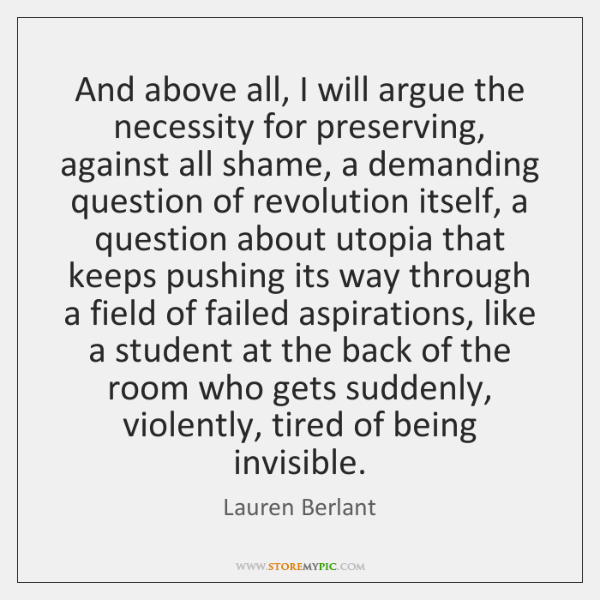
On June 28th, I opened up my Twitter account to do my usual procrastination method of scrolling through recent tweets before opening up my emails and then writing documents. I saw multiple messages about Lauren Berlant, a prominent queer and gender theorist, and I looked through to see what was being discussed. Sadly, it was about the passing of Berlant, and it registered that no longer would I be able to pick up new works of Berlant’s and head down the queer experimental theoretical rabbithole that they were so good at creating (note: Berlant used they/them pronouns). Each time I picked up a text by Berlant, like “Sex in Public” (written by them and Michael Warner), The Queen of America Goes to Washington City, Cruel Optimism, and so many other texts, I entered (and still do) a new portal that leads to what a queer approach does when applied to American Literature and culture. I’ll always remember the reading experience of Berlant’s cultural analysis of Harriet Jacobs, Frances Harper, and Anita Hill. I learned, in that moment, that literary criticism can look to the past (Jacobs, a 19th-century Black female writer detailing her journey from slavery to freedom) and present (Anita Hill, a contemporary Black female lawyer testifying against Clarence Thomas’ sexual harassment) to understand cultural conditions. In this analysis, Berlant demonstrates the intersection of scholarship and activism. The following quote by Berlant will always resonate with me, and I’m sure so many other queer people who feel the invisibility of their identity or societal pressure to hide their queerness (a pressure to stay in the closet).
For that and so much wisdom, I thank you Lauren Berlant.
“You can have your dreams, but you can’t have me/I can’t go back there anymore/’Cause I am not the boy next door” (Peter Allen)
Those who know me well always hear me raving about certain musicians who have entered my exercise life (especially during my walks), and a few months ago, I turned to Peter Allen. I’ve always loved Hugh Jackman’s portrayal of Allen in the Broadway musical The Boy from Oz, and when I found a Peter Allen at Carnegie Hall live album, I was in a queer male musical paradise. The lyrics above deeply register with how I feel that I’m continuing to leave that closet far behind me. I definitely don’t want to go back to hiding my sexuality, especially the pressure of staying closeted in social spheres where a queer male voice breaks down heteronormative ideas. This is why I’ll always be grateful to have had the opportunity to speak at Port Washington Library last year during Pride month, on the last day of June to be exact. In “Queer Literature: Naming and Identifying,” I reflect on the genealogy of LGBTQ+ Lit. from 2020 to Whitman’s Leaves of Grass. If I delivered this talk today, I would definitely add Brit Bennett’s The Vanishing Half, Lev Raphael’s “Dancing on Tisha B’Av,” and Robert Jones Jr.’s The Prophets. So, I decided to update my LGBTQ+ book list that I’m excited to share with you all.
And I was going to release the Queer Lit. talk done at Port Washington Library as a bonus podcast episode, but because the talk relies heavily on visuals (audio, video, slides), I’ve decided to include the YouTube link here for all of you to enjoy (but if you want to follow my regimen, walking while listening to YouTube videos, go ahead and enjoy). You all have my permission to share this with your friends, family, and fellow educators since my intention with this talk is to amplify LGBTQ+ writers of color. As a queer, white, male, cisgender, writer, educator, and activist, I want to make sure that I analyze my own privileges and expand beyond queer, white, male voices. If any of you have suggestions of books that I don’t have on this list, I’d love for you to email The Ivory Tower Boiler Room team so we can add onto this list (ivorytowerboilerroom@gmail.com).
I hope that you all enjoy the following video. I want to end my reflection on Pride month with a poem from the last play that I saw before the pandemic, The Inheritance by Matthew Lopez.
After I saw both parts of Lopez’s play, I purchased the script, and once you open up the book, Constantine Cavafy’s “Hidden Things” (trans., John Chioles) sets the tone:
From all I did and all I said, let them not seek to find who I was. It stood an obstacle in my way this, altering my actions and my way of life. This stood an obstacle in my way, stopping me all the times I wanted to speak out. My most unnoticed actions, discreet writings, those most disguised— from these alone they’ll understand me. But maybe it’s not worth so much care, all this effort just to know what and who I am. A long time from now—in a more perfect world— some other made like me will appear and, to be sure, he will act freely.
(P.S.)
I’m excited to announce a special blurb called Andrew’s Bookshelf where I’ll be reading LGBTQ+ Lit. and featuring a new book each week. Pride month is everyday in Andrew’s head.
My first book that I’ll write about will be Ula Klein’s Sapphic Crossings.
It’s hard to imagine a more exciting month for our little team. At this time last year, The Ivory Tower Boiler Room was just some idea that Andrew and Adam were batting back and forth. Andrew and Mary had known each other since elementary school, but had not collaborated on anything since high school theater. Adam had not yet met Mary, and Erika had not yet met any of the other three. And now here we are. We have things planned for our anniversary in August (did someone say ‘live show’? I feel like I heard someone say ‘live show’), but this month already feels like the culmination of a year of progress.
We accomplished amazing things this month. Andrew kicked off the celebration, memorialization, and renewed commitment with a delightful rendition of his own coming-out story. Erika followed up with a searing yet ultimately hopeful take on the 40th anniversary of the first cases of AIDS in the United States. Members of the Boiler Room had friends and strangers alike, in person and on social media, accosting us to say what a beautiful job Erika did. Erika followed that piece up with an elegiac but redemptive piece on the Pulse massacre and its continued effects on her adopted hometown of Orlando, Florida, and finished strong with her Big Think about parsing the many aspects of her culture. Adam bled a little on the page as he examined his own internalized homophobia. Mary was at her intriguing best, writing her excellent true crime pieces, one about a tragic case of mental illness and the other about a simple but baffling case of plagiarism, as well as giving us the inside look at what it means to be an ally who was raised Catholic. She also wrote our piece on Juneteenth. Not to be outdone, Tiffany wrote a particularly beautiful piece for us about the tendency of love to move toward the universal and the inclusive, in between watching her children graduate and much else besides.
So much for the big pieces. This month also saw the rise of Adam’s pet project (see what I did there?) “Big Cat, Little Cat” which hopefully speaks to the scowling, misanthropic feline in all of us. Erika wrote a delightful piece on bisexuality and combating bi erasure. (A one-off departure from her usual sturm und drang? Or a portent of things to come? Stay tuned!) And we’ve had little gems scattered here and there, like Andrew sharing his reading lists.
This month also included some firsts on the blog. Cameron Martin was our first guest-writer, coming to us from Idaho with an amazingly insightful piece about his own poetic process, and Sophia Basaldua was our second, reviewing books that we now all have on our reading lists. We also received the signal honor of hosting poetry by Rita “Rusty” Rose, a poet who was an eyewitness to the original Stonewall Riots, and has since seen fifty-two years of LGBTQ* progress and setbacks come and go. Her poems are gorgeous, and we are lucky to host them.
And that was just the blog. Over on the podcast side…
We kicked off the month with a round-table (in two parts, plus a coda recorded by Erika and Andrew) about what this month meant to us. The topics ranged from light to heavy. Then we did a short segment called “The Real Housewives of Academia,” because of course we did, followed by a conversation with the brilliant Ula and Kathryn Klein. Their one-year-old gave them the hour off to chat with us about their respective writing projects. Both are churning out scholarship and fiction at an alarming rate, with Ula having just premiered her work Sapphic Crossings and Kathryn having debuted her latest book, From the Woods , a few months before. Ula has since come out with a novel, Enchanted Autumn. Why not?
Another first for ITBR: Our episode “The Closet in the Library” was our first book launch, courtesy of Kate Flint and Jason Rudy at the redoubtable Broadview Press. As much as we love geeking out with fellow book lovers, it was particularly poignant and joyful to be included in the process of bringing lost and suppressed voices into the canon–Mary Prince, Toru Dutt, Rabindranath Tagore, Amy Levy, and many others. All of our reading lists are stuffed to bursting, as if they weren’t already.
Part of what is most gratifying about this month’s reflections and festivities is how we feel ourselves planting the seeds of our future work. One great publishing house taking a chance on a lil podcast leads to others; one or two amazing poets using our site as their platform leads to others. It feels good to be doing good work and to have that work lead to opportunities. So stay tuned for our interview with New York Times theater critic Jesse Green, as well as more collaborations with writers and artists of every stripe. Also: if you are a writer or artist, please get in touch; let us know how we can help you!
One thought that we wanted to end with: there has been much talk this year about sanitizing Pride; about making the parades ‘kid-friendly’ or ‘family-friendly.’ We set out with the opposite intention: we can be proud and uncomfortable at the same time. No, it’s more than that. The idea of ‘pride’ implies having something to be proud of, which implies having come through something difficult. “The first pride was a riot,” lest we forget. None of the four of us was old enough to participate in that riot, and if we were, our privilege would likely have kept us safe from needing to do so, but we can stand in solidarity with those who did; with the difficulties they faced that drove them to that transformative act of resistance.
Come back to see Andrew and Erika give their personal concluding thoughts on this whirlwind of a month. And as always, keep reading.
“That’s why her hair is so big. Because it’s full of secrets.” -Damian, Mean GIrls
“Do I contradict myself? Very well then I contradict myself, (I am large, I contain multitudes.) -Walt Whitman, Song of Myself
A hundred and fifty-ish years apart, and we queers are still talking about secrets and contradictions and the things that we’re hiding…
The story I really want to tell for my Big Think is not the story I’m going to tell. I can’t tell the story I really want to tell because it’s not only my story, and the center of the story involves two other people who are not ready to share the story yet. And because it is my story but not my story alone, I will keep that story to myself until and unless they allow it to be shared. This is not that story, but it’s a sort of origin story for the story I really want to tell.
——-
Six years ago, my father died. His death was sudden and shocking. Although he’d been sick with progressive supranuclear palsy for a few years, the doctors had helped him to stabilize his condition. I was watching an episode of Saturday Night Live when I got the call from my mother telling me that they had been watching TV, and he’d decided he was tired and wanted to go to bed. She had work to finish, (and she’d always been more of a night person than he had anyway), so he began to make his way upstairs, but about halfway up, he fell, collapsing at the bottom of the stairs, momentarily conscious before succumbing to a massive head injury. Within eight hours, I was prepped, packed, and on an airplane to New York. In keeping with Jewish tradition, my father was buried as soon as we possibly could, and we sat shiva at the home I grew up in. And, as is traditional, my father was buried with a tallis with the tzitzit (fringes) removed. This meant deciding of course, what to do about a tallis? Do we bury him in the one he’d been given when he turned thirteen at his Bar Mitzvah? Do we bury him in the gigantic one that had been brought for him as a gift from Israel? Or do we hold on to those as family heirlooms and purchase an inexpensive, simple one through the funeral home? My father and I didn’t see eye to eye on all things religious, but, of his children, I definitely had the closest ties with him, and deepest conversations, and my family looked to me for leadership on the religious matters. Had he been aware, he’d have struggled with the idea of a daughter, or any woman, making those decisions for him when he had sons who, in his mind, should have been doing it. I like to think he would simultaneously have been relieved or comforted at the idea that at least one of his children knew enough to make the decisions according to his preferences and beliefs. (My father had a complicated relationship with feminism… when they tried to push my sister to teach math instead of going into engineering, Dad was right there insisting that she have those opportunities… but when it came to religion, he had a much harder time accepting women in certain roles… he also struggled greatly with having female bosses.) So Dad was buried with a new tallis, and I returned home with his big, giant, Israeli tallis, which I left in its bag, in my closet, for months and months.
I didn’t grow up wearing a tallis in the synagogue. Women didn’t wear yarmulkes either when I was growing up. If they covered their heads, they either wore hats or pinned on these little lace doily-things that were in a basket next to the yarmulkes. There were clear divisions between what was for men and what was for women, even without the formal divisions like a mechitza, or separate women’s section. In fact, until college, most of my Jewish experiences were entirely egalitarian; there were a few exceptions… my Dad bought each of my brothers a tallis and tefillin when they turned 13, while my sisters and I didn’t have that experience; there was a synagogue where some of my friends (not my family–we went elsewhere,) went that would allow bat mitzvah services only on Friday evening or Saturday evening, but bar mitzvah services could also be held on Saturday morning. But most other things that I can recall weren’t divided by gender.
In spite of knowing that I’d never be quite enough for my Dad when it came to matters of religion, I still worked hard to meet his expectations and live up to his standards… and by the time I got to college, I was confused. I’d struggled all along with the idea of an omnipotent higher power who had that much control in the universe (there are things I didn’t figure out about this until I was in my 40s, and the key to figuring some of this out has been my friendship with a Presbyterian minister.) I couldn’t figure out what parts of my Jewishness were cultural, what parts were about belief or faith, what was important, what wasn’t. ”Jewish” was just a label I applied like a sticker to myself, like “New Yorker” or “redhead.” I spent my first year in college putting distance between myself and Jewish stuff, which helped me unlock the things and the ways that my Jewishness was important to me. I had Jewish friends, but mostly avoided affiliating myself with the Jewish community on campus… I think I happened upon a Hanukkah candle-lighting event one night, but that was about it. I didn’t tell my family about pushing my Jewish identity away… I just did it. I didn’t talk about it much with anyone, actually, I just did my thing. I needed that year off though; that year helped me see how that Jewish identity fit into my whole self as a person, was one piece of me, New Yorker, feminist, student; each piece part of the whole picture. When I returned to campus for the fall semester of my second year, I had a new perspective on how being Jewish fit into the whole picture I had of myself.
I’d figured out the Jewish part for the moment, but things still weren’t right–like when you’re working on a jigsaw puzzle and the last piece has gotten a little damp and is now swollen and peeling apart in layers, so it doesn’t quite fit into the last space of the puzzle. And I didn’t know who to talk to about it either. I was hardly ready to consider it myself, but as the easier questions were answered, the lack of answers for the harder questions was more and more noticeable. I couldn’t even figure out how to talk to my two closest companions about the biggest question–one, woman I met while performing Rocky Horror Picture Show, and the other, a roommate of a guy I dated my first year in college Certainly not people I should have been afraid to share my overwhelming question with…but I couldn’t do it.
I couldn’t avoid it any longer though. Pieces of adult-me were becoming solidified, and whether I liked it or not, I needed to figure out what all the recrimination, avoidance, shame, self-doubt, and general self-hatred I directed at myself, along with the way I felt when I looked at (or kissed or danced the horizontal hora with) people whose gender matched my own. I’d been dancing that dance for three years… and had been watching from the sidelines a lot longer than that. I’d developed strong connections and friendships in queer communities–first as a peer educator about HIV, and then because of friends I’d made in college. I’d spent hours exploring on my own what I thought claiming queer identity might mean… read books and articles, watched movies and talk shows (I recall Donahue in particular airing episodes about bisexuality; in fact I’ve dated at least two people who appeared on one particular episode).
When you begin to put irregularly shaped stickers on a page though, first you have plenty of room. Each sticker can be seen in its entirety. After a while though, you begin to try and squeeze stickers in wherever they’ll fit…and eventually, they overlap, covering parts of others, intruding on the edges, and becoming a collage of images, words and colors. And that’s the place I was at with my own self. I suddenly found my labels were impossible to separate from each other. As I discovered more about myself, as I began owning my labels as an adult, those labels began exerting their influence on each other, swirling together to create something entirely unfamiliar and yet still mine. But how to bring this new idea in? It doesn’t just stack neatly on top. There’s not a simple way to splice it like when I’m knitting and need to add more yarn to my project. Feminism and my Jewish identity? That was easy. There are so many Jewish feminist role models. And we have Rosh Chodesh each month. I’d become one of the people who planned and led Rosh Chodesh programming and services. New Yorker and Jewish? People use “New Yorker” as code for “Jewish” sometimes when they don’t want to sound anti-Semitic. And the same was true for many other labels I’d apply to myself. But queer? I knew queer men, sure, and one or two were Jewish, but not women, not other girls. My Jewish life on campus and my queer involvement on campus were both known in student leadership circles, but they existed in mostly separate universes, just like my involvement with Rocky Horror Picture Show or the Student Activities Board, they all fell under “campus activities” but rarely intersected with each other unless it was at something like a leadership training for executive board members for student clubs.
The hours I’d been spending at Hillel would turn out to be so important in helping me to figure things out. Hillel staff–not students, not interns–knew I was involved in both Jewish and queer activities on campus. Somehow, the rabbi passed a copy of the book Twice Blessed: On Being Lesbian or Gay and Jewish to me, and suggested I might like it. (It was the 90s. Just including “Lesbian” was progressive at the time.) Someone else got me involved in the collection of information about various synagogues that were welcoming to students and I ended up visiting several that were in walking distance to campus…but one that I was asked to go visit happened to be the local queer synagogue. And this is where I first saw women doing things that were traditionally “for men” like wearing a tallis. I tried it out in this space, learning the blessing for putting one on, learning how to gather the four corners with their fringes and make sure they were carefully placed–left and right in front, left and right in back. I read Torah for the first time in years, with more confidence than I’d felt ever before. I felt safe and comfortable, wrapped in the borrowed fabric… but I knew my father would never be okay with it, and nor would my mother. This probably should have been an indication that coming out to them would be a disaster (and it was, too.)
I don’t know if I was telegraphing a message that I was struggling with big questions, or if those helpful things happened because I had my feet in both the Jewish world and and queer world. I do know that I wasn’t telling anyone, wasn’t talking to anyone about what I was trying to figure out. What was I? What label actually fit? “Lesbian” definitely didn’t feel right. “Bisexual” kind of worked, but was that a real thing for women, and not just something in porn films or done for the interest and pleasure of men? (It existed, in my head, for men; my work in HIV and a couple of celebrities–David Bowie, Elton John, Freddie Mercury, who were or had previously been labeled bisexual at the time ensured that.) All around me were messages about bisexuality that made it seem fake, either it was something women did because guys liked it, or it was just something women did on the way to becoming lesbians. Neither of those ideas worked for me, but the idea that you could “embrace the ‘and’” did. I didn’t know any bisexual adults at the time, and wouldn’t meet any for a while, but I had finally found a sort of comfortable space. In between. In the middle. Like the overlapping part of a Venn diagram.
I say “sort of comfortable” because the label “bisexual” can be complicated; most people have a hard time with the idea that people stay in that “either/or” space–it goes against our nature as humans; to try and conserve our thinking energy, we prefer to simplify things as much as we can. Duality confounds us. It was complicated because I knew gay men, I knew lesbians, but no one in my “real life” was bi… and in exploring queer identity I had grown in my understanding of the expansive nature of gender, too. Within the bi communities I had checked out online, there was a lot of debate too, about the label…was “bisexual” exlusionary because of how it treated gender as binary and not a spectrum…a lot of talk about pansexual vs bisexual, and a lot of talk also about how “gay” or “lesbian” made it sound like people were more than just the sex part of “homosexual” but there was no comparable way to express that one might be interested in both/and, rather than either/or. It was the early 90s, and, as a young person who had grown up in the shadow of the AIDS epidemic, where so much hate and anger had been directed towards the LGBTQ+ community, it was starting to feel like things might change a little. Hawaii was talking about legislating marriage equality. “Don’t Ask, Don’t Tell” had begun. Cracks in the mask of anti-LGBTQ+ hate were showing. Using the label “queer” to describe myself felt a little transgressive, a little angry, but it also helped me to acknowledge, and to share with others that sharing that part of myself was about more than just who I wanted to kiss, it was about being able to live an open, out and authentic life no matter who my partner might or might not be. The label I prefer for myself is queer (often “queer as a football bat,” which you’ve heard me say on part I of our podcast episode about queerness and allyship.)
I came out to friends, and, bit by bit, to a few family members, and finally, and disastrously, to my mother (there was screaming and yelling and a lot of other stuff…and nearly three decades later, I can’t say things have changed.) Most importantly though, I learned about my wholeness; that I am this and that, and I cannot be this without that. I have to be all of me. Parts may appear brighter or more in view in some places or with some people, but being me is additive, not compartmentalized. Even if someone doesn’t know I’m Jewish or queer, or a parent or any of the other labels I wear, those labels all influence me, they shape how I move through the world and every part of my experience. My queer identity and my Jewish identity, my gender and the complicated feelings that go along with it, my feminist identity; each one is intricately knotted together in a macreme pattern with others, lifting up or holding back different pieces depending on what needs to be seen.
I am now in my forties, and chronic illness has left me disabled. It’s not easy to find that you’re increasingly reliant on other people to do things you feel like you should be doing on your own, to find yourself struggling to be independent and or to find that you are less and less able to do things you love or that brought you comfort and joy, especially when your children are reaching an age where you’re more able to do those things. But that’s what happened to me. Being disabled adds another layer of complications to everything. There’s pragmatic stuff like getting around, going to places; there’s learning how to navigate obstacles like what happens when you’re using a wheelchair and the curb-cut or sidewalk is blocked. How do I respond to the fact that it seems like when I decide to use my wheelchair, I become stupid, invisible or both to people around me–sometimes even people who I’m acquainted with, like at a doctor’s office or favorite restaurant. How do you explain to people that using a wheelchair doesn’t mean I can’t walk at all, but perhaps it means that my hands aren’t doing well enough to grip my cane or walker that day, or that my balance is not stable enough that day and the chair is safer? What do you say to someone who treats you like a piece of furniture when you’re in the chair; I’ve had people who need to get by me when I’m in my chair say “Excuse me,” and then move me as if I were a table or ottoman. The chair is an extension of my body. It enables me to do more things, safely, comfortably and with less pain. There’s so much more, too.
I can’t be not-disabled now anymore than I can be not-queer. But by having had to confront my own queer identity, when it became clear that “disabled” was going to be a new label I was going to have to take on, I had to go through an expected process of confusion, grief and acceptance…but I knew how to do that. I’d confronted all kinds of feelings and learned how to see a new picture of who I was when I’d come out of the closet as queer 25 years prior. And I learned how to incorporate that new label into my whole experience in the world. And, I also knew how to speak up when I needed to, to be able to say “If you put the trashcan there, a wheelchair user can’t get into the bathroom without crashing into your trashcan.” Because of the experience I had learning to be a queer person, I knew how to learn how to be a disabled person, and to incorporate that into being me. I was able to speak with (some) authority as a disabled person…and that empowered me to call out some uncomfortable language-use recently. That completeness (though temporary, because we are all, of course, changing always) wouldn’t have happened if I hadn’t gone through the experience of uncovering what it meant to me to be Jewish, of coming out as a queer person, and then synthesizing that disabled identity into the whole me.
Our “Big Think” this month was to reflect on Andrew’s statement,”I don’t have to wait for you to give me the key,” I realize that I am carrying the keys myself, although I may not always recognize them for what they are, or be able to find the right lock to match with the right key at times. Sometimes I need to seek out a little graphite from someone else to help fit the key in, but the keys are in my possession the whole time. It happens that one of the keys on my keyring happens to be rainbow colored.
*Follow these links to find out what an orange on a seder plate signifies.
Adam and Andrew sit down with editors Jason Rudy and Kate Flint to discuss the upcoming release (July 13) of Broadview Press’ Victorian Era anthology. We discuss how this new edition amplifies queer, BIPOC, Jewish, and female voices. Jason and Kate engage with all different readers of this anthology including educators, students, Victorian Lit. enthusiasts, and those who want to learn a little more about Victorian authors. This book launch interview works well to put together your own reading guide for Victorian Lit, and we encourage our listeners and readers to share this episode with your communities. Andrew knows he will share this episode with his students, in the fall, when they discuss the Victorian Era. Feel free to use this episode in your own teaching as well.
“Shaped by sound literary and historical scholarship, The Broadview Anthology of British Literature takes a fresh approach to many canonical authors and includes a broad selection of work by lesser-known writers. The anthology also provides wide-ranging coverage of the worldwide connections of British literature, and it pays attention throughout to matters such as race, gender, class, and sexual orientation. The full anthology comprises six bound volumes, together with an extensive website component; a passcode to access the latter is included with the purchase of one or more of the bound volumes. A two-volume Concise Edition and a one-volume Compact Edition are also available.”
“Welcome to Undisciplining the Victorian Classroom, a digital humanities project that reimagines how to teach Victorian Studies through a positive, race-conscious lens.
We bring together a diverse set of individuals – permanent faculty, contingent staff, independent scholars, students – through an intentional collaboration based on radical care that responds to the renewed call for racial and social justice.
Our project advocates for engaging scholarship from Black, African, Indigenous and Native American, Asian and Asian American, Latinx, Postcolonial, Decolonial, Feminist, Queer, Transgender, Disability, and Critical Ethnic Studies.”
Andrew mentions Nasser Mufti’s “Hating Victorian Studies Properly,” and you can find that article and the whole issue of Victorian Studies’ Spring 2020 “Undisciplining Victorian Studies” (it’s free!) here.
This week’s podcast episode is four people talking about the subject they love most. Books, of course. But also: why do we read certain books and not others? All too often, the answer is: the books we have easiest access to were written by straight (or straight-presenting), white, male Christians… and others… were not. Enter: Jason Rudy and Kate Flint to discuss the phenomenon we call “The Closet in the Library,” in which certain books are hidden from view, despite their obvious merit, simply because the author or the subject is objectionable on racist, misogynist, or homophobic grounds.
Editor Jason Rudy is especially interested in highlighting “how this new edition helps broaden Victorian studies for the undergraduate classroom — by significantly deepening our selections from outside the UK and by non-white authors… That was one of our main goals for the edition, and I’m proud of the work the whole team did on that front.”
Editor Kate Flint makes note of the fact that this episode is airing during Pride month, and tells Andrew and Adam: “definitely we’ll want to talk about sexuality/queerness/etc., and how our selections allow people to put together classes – even courses – on these issues.” The phrase Professor Flint uses, “decolonizing syllabi,” may sound obtuse at first, but all four do their best to make its meaning clear throughout this interview.
*
As you psych yourself up to listen to the interview, and inevitably put thirty-nine more books on your already-dangerously-teetering “must read” pile, here are Professor Jason Rudy’s answers to the new ITBR pre-interview questionnaire:
1.What are you listening to, reading, watching? I just read Tara June Winch’s novel The Yield (2019). Amazing! I also recommend Awaye and Frontier War Stories, two podcasts on Indigenous Australian history, culture, and politics.
2.Do you like to cook? What is your favorite thing to make? I cook all the time. Homemade pastas, breads, and anything Ottolenghi. I love Charlie Trotter’s cookbooks, too.
3.What is something you have read and loved, and wish more people would read? I think everyone should read Carpentaria (2006) by Alexis Wright. It speaks to Indigenous Australian culture and politics, situated in the present climate disaster, with a style something like magic realism. It’s epic and gorgeous and powerful.
4.Did you grow up with video- or computer-games? What were/are some of your favorites? I remember playing the original Legend of Zelda, and a game called “Fraction Fever” (to which I owe some of my love for math).
5.You’re taking a sick-day from work. What movie are you putting on. I’d probably be rewatching episodes of Endeavour. I’m a big Shawn Evans fan.
6.What’s your favorite excuse for why you have writer’s block? I’m mostly just distracted or busy with other things! Once I sit down to write, I can usually get something on the page. But it often seems like a major accomplishment to push everything else aside and make the time for writing.
7.What’s a book everyone says you should read, but you either read it and hated it, or haven’t read it. I’m not a fan of Our Mutual Friend! I should probably go back and try again, but I couldn’t stand it the first time.
*
So what are we in the Boiler Room reading/watching this weekend?
Andrew is reading Lev Raphael’s Dancing on Tisha B’Av in preparation for having him on the podcast in a few weeks. Erika has talked the book up so much, about how much this story impacted her queer Jewish identity, and Andrew is excited to feel a similar resonance. So now Erika also needs to get her hands on the book, which is good because, with Tisha B’Av less than a month away, we could all stand to brush up on our dancing skills. (If you knew that Tisha B’Av is the most solemn day of mourning in the Jewish calendar, you are probably chuckling appreciatively right now; if not…)
Andrew is also catching up on the Queer as Folk reunion, hosted by Stars in the House, on YouTube. This TV show deeply resonated with Andrew after he came out. When he was entering college, he would watch Justin and Brian’s storyline again and again and again. Oh, how empowering it was for a recently out Andrew!
If that isn’t enough, the Dreamgirls In Concert album is on repeat in Andrew’s apartment this week.
Adam has been at loose ends in his reading. The Custom of the Country by Edith Wharton is great, but it’s not good bedtime reading. Shit, Actually by Lindy West is amazingly hilarious but again, cackling like a hyena is not necessarily the goal of late-night-reading. Surprisingly, Terry Pratchett’s Mort, as funny as it is, is a good balance. Nothing new to report on the listening front. More Bach, more Beethoven, more Hannah Gadsby. Bach’s Mass in B Minor turns out to be a great piece to write to. The Netherlands Bach Society has been the go-to version, but this recording by l’Ensemble Pygmalion is nothing to sneeze at either (unless Bach gives you upper-respiratory allergies).
Erika’s read/listen/watch includes Dar Williams. She’s been listening a lot to “When I was a Boy” and “As Cool as I Am,” as well as Ani DiFranco and Indigo Girls. She has also been watching a lot of knitting videos on YouTube,looking for the right fancy cast on/bind off for a scarf. And some analysis about queer vampire tropes. And some videos from ex-Mormons. Erika also wants to finally get around to the new Tales of the City, which she hasn’t watched yet. As for reading, she is trying to get herself a copy of Let the Record Show, Sarah Schulman’s book about ACT-UP, and is also thinking of picking up LC Rosen’s Camp using some bookstore gift cards from her birthday. In slightly more exciting news: “I’m poking around some erotica titles, because I have this stupid sex scene in a story that I have been staring at for months and haven’t been able to write, so I may go digging through how other people have written things to see what I want to do.”
Finally, we come to Mary, who declined to give her recommendations this week.
Shock!Why?
Because they are all spoilers for Tuesday’s True Crime in Academia column.
Really? All of them?, we hear you cry.
Yes, dear reader. All of them.
But she did consent to give the following clues:
What can it all mean?
*
Happy reading, listening, and mixed dancing everyone!
Photo by Erika Grumet, Text by Adam Katz, starring Frob as Big Cat and Widget as Little Cat.
.
.
.
Two Cats, one large and orange, one small and grey, both striped. Big Cat looks down at Little Cat with a placid countenance; Little Cat looks off into the distance, eyes pinched with unresolved anger.
Big Cat says: “Little Cat, I’m reading my star chart. What’s your sign so I can read yours too?”
Little Cat responds: “Well, I’ve been neutered so I guess Virgo.”
This week is a bit of a first in the almost-one-year history of the Ivory Tower Boiler Room: we were asked to do a book review of sorts. The editors of Broadview Press invited us to interview them on the occasion of their release of the new edition of the Broadview Anthology of British Literature, Volume 5, The Victorian Era, 3rd Edition. Obviously we got to look through the book first; it was quite a trip.
First, they take “British” to mean: anywhere under British sway, which means this is the only anthology of its kind to be including Toru Dutt, Rabindranath Tagore, Mary Prince, and many regrettably less famous names from India, Africa, Ireland, and Australia. There are also several Jewish and queer writers who were not previously getting their due, such as the novelist Amy Levy and Andrew’s beloved poet, literary critic, and sexologist, John Addington Symonds.
Have a listen in a few days (new podcasts usually drop Saturdays, so this one will be out June 26) and you’ll hear what all the fuss is about. We dare you not to be infected by the sheer joy of listening to four people talk about the subject they love most.
One of my favorite new activities is writing a blog post and having someone I care about bring it up in conversation. I like doing the reverse, as well, not surprisingly.
My recent Big Think, about trying to shed the homophobic bias I was invisibly raised with, led to an amazing conversation with a friend about how, really, everyone (queer or otherwise) grows up in this same aquarium, getting fed fish-flakes of homophobia and racism until it feels like they’re part of our biological makeup.
It felt good to hear positive reactions to that article because I did go out on a limb in writing it. And also because the person I was talking to (no promises) may author a piece or two for us in turn, and get positive reactions of his own. And I’m proud that I wrote it. It’s not necessary to hear from people that I respect to confirm that it was worth the risk, but I’m not going to turn them down, either.
A conversation about the pervasiveness of these evils leads naturally into a discussion about the people who try to have it both ways. Academics, lawyers, filmmakers who are (or were) considered great feminists and allies, but nonetheless carry on with toxic behaviors, both in their private lives and in their places of work.
I will not delve too deeply into this conversation, because we could be here forever, but one idea my friend raised that stuck with me was this: we have to keep dredging up embarrassing moments from our past and reexamining them, because that is how we prevent ourselves from engaging in embarrassing moments in our future. And because that’s how we signal to other people that it’s ok to make mistakes as long as you’re trying to correct them, make up for them, pay them forward. In short, we have to learn how to sit with, and resolve, complex emotions.
The incident I brought up in my last Big Think, in which I engaged in homophobic bullying as a 12-year-old, came about because of that inability to sit with, and process, complex and paradoxical emotions. It had nothing to do with sex or sexual preference. We barely knew what sex was; I would attest that none of us was sexually active at the time. We were learning these labels, context-free, long before they would connect to any recognizable patterns of behavior. That is one of the aspects about the situation I described that is so toxic. We as a society teach kids to be homophobic LONG before they ever have an opportunity to try to experiment with their queerness. Do we think we are nipping their queerness in the bud? Thank God it’s not working, but we are teaching queer people and straight people alike to hate themselves more than they otherwise would.
We need to teach kids it’s wrong to bully other kids, obviously; that it’s wrong to bully other kids specifically on sexual grounds; that it’s wrong to queer-code certain activities. But what ties all of this together is that we desperately need to teach positivity. We to teach kids to be comfortable in their own skin so that when someone calls them ‘gay’ they can shrug it off, the way my friend did all those years ago, and not feel the need to deflect the insult by redirecting it to an innocent bystander, the way I did.
It’s taken me a long time to be able to feel comfortable with other people insulting me. I consider it one of the skills I learned, and I credit the people who helped me to learn it. I don’t mind being a bit proud of it, and wishing other people could learn it, too. I also don’t mind admitting that growing up upper-middle-class, with an inherent sense of safety and security contributed to my ability to shrug and laugh it off when other people try to bully me.
I don’t have a solution for that last part, that is, for the connection between self-assurance and privilege, except to say the usual things: Living wage now. Taxpayer-funded healthcare now. I don’t have a much better idea of how to go about getting those things than our current sitting president. But I do believe we have some of the momentum, and a growing share of public opinion, in our favor. On both the economic issues and the social ones. But just like with purging one’s inner homophobe, it’s important to keep fighting for ‘the people on the edge of the knife.’
Maybe a bit closer to home: I hope that processing these long-ago events helps someone out there. I hope it helps someone realize that we do all have this baggage, and it’s no shame to admit it; or if it is, the shame can be processed. There’s another important point, which is that an act of homophobic (or indeed any) bullying, while we would prefer to avoid it at all costs, doesn’t mean that the perpetrator is toxic; not necessarily. Did they apologize? Grow? Change? What underlies the behavior? I don’t want to minimize the hurt that even a single act of bullying like the one I described in my previous Big Think. But I do want to say that everyone does things they regret, and as long as there is regret and an attempt at the kind of restitution that is the natural companion of regret, then there can be growth and healing.
*
Please reach out to us if you’re interested in writing something in a similar vein. This is fertile ground, and we could all use a place to air our dirty laundry in a positive way.
(Erika Grumet on behalf of the Ivory Tower Boiler Room team)
This episode (“Two Writers are Better Than One: Ula and Kathryn Klein talk LGBTQ+ Academic and Creative Writing”) is a true Stony Brook English department reunion. Adam and Andrew are joined by two PhD alums, Ula and Kathryn Klein who talk all things LGBTQ+ academic and creative writing. An energizing conversation ensues including writing group tips, favorite reading genres, how academic and creative writing may be more similar than we think, and of course, Adam and Andrew cracking each other up.
You can check out more about Ula and Kathryn, read their answers to our new questions, and find links to their work if you read our post “Four Seawolves on a Zoom.”