A Guest Blog-Post from Lev Raphael

Why I Write Queer Crime Fiction

You can catch the third episode of Lev’s interview on the podcast this weekend. In the mean time, here is a delightful little essay he wrote about how he became a writer of queer mystery stories.

(Originally published on June 5, 2021 by Lev Raphael on his blog)

I never set out to write mysteries, queer or otherwise. When I launched my career as an author, it was with short stories which were ultimately collected in a book that won a Lambda Literary Award.

But one of them, “Remind Me to Smile,” featured a couple of academics faced with a bizarre situation: Stefan has secured an ex-lover a job in the English department where he’s the writer-in-residence.  His partner Nick is outraged and then a bit crazed when Stefan invites the ex to dinner.  It was comic but also focused on the struggles of being a couple years before marriage equality changed the landscape.

My first editor at St. Martin’s Press was very taken by the story, only he said the dinner guest should have been poisoned (!). And then a few years later, when I was wondering where I should take my career after a collection of short stories, a novel, and a study of Edith Wharton, my editor said “Nick and Stefan could be like Nick and Nora Charles.”

That’s when the Nick Hoffman series was born. He and Stefan teach at the same university and are happy together, but the unexpected keeps intruding into their lives thanks to the murderous academics they work with. I’ve continued writing it over the years because I loved the characters and because I loved the academic setting where, as Borges put it so well, you find bald men arguing over a comb.

I was already a fan of mysteries before I started; I grew up in a household filled with Agatha Christie books; and I was reviewing mysteries and thrillers for the Detroit Free Press. That made me determined to avoid one thing: sleuths who don’t get changed by what happens to them. In far too much crime fiction, the protagonist discovers a body and then goes off for breakfast at Denny’s as if nothing’s happened.

Nick ages and is definitely changed by the deaths he encounters. His relationship with Stefan develops, too. Depicting a loving queer couple over time and under stress has been one of the joys of this series.  The world has changed a lot, too, since the series began in the 90s, so it’s been fun to chart those changes in mysteries, which are good vehicles for social commentary.

Mystery writing has made me a better teacher, too, and I’ve been fortunate to teach mystery fiction in classes, workshops, and online.  The series has more impact than I would have guessed, putting me on the map in ways I never could have imagined.  The New York Times Book Review took notice, especially relishing the academic milieu.  That’s how a writing career goes: the unexpected is always your companion.  And of course, the unexpected keeps happening to Nick and Stefan living in a bucolic college town that has a dark side.  Through all of it, however, their bond is never shaken.

Lev Raphael’s latest mystery is Department of Deathwhich Publishers Weekly called “immensely enjoyable.” He mentors writers, edits manuscripts, and teaches writing workshops online at writewithoutborders.com.

(fingerprint image by Kurious at Pixabay)

If you enjoyed this piece, please consider making a donation to help us grow our literary and artistic community.

Wednesday Teaser: Interview with Lev Raphael, Part 3

“Let your home be a meeting place for the sages”-Pirkei Avot 1:4

Once again, we bring you the wisdom of our friend Lev Raphael for part three of the incredible conversation between him, Erika, and Andrew.  On his third visit with us, we hope he’s found a comfortable chair, and that the abundant throw pillows aren’t in the way. 

What makes this interview so special is that Lev was one of Erika’s favorite authors when she was young and coming into her identity. We would love to hear from you in the comments section (or in person, virtually, at the book club! See below!) if you have a similar experience with Lev or another queer author.

Look for us to get into two big topics when part three of the podcast drops on Saturday:

  1. In the early-to-mid 1990s, it seemed like queer culture was going to become mainstream culture: Don’t Ask Don’t Tell, which we’ve since thankfully moved past, represented at the time an admission of queer people into public spaces. Hawaii was considering legalization of same-sex marriage; the discussion was also swirling in Europe as civil unions became available but not marriage. And the first protease inhibitors were being developed–an enormous advance in medical technology, and signaled a lessening of the AIDS epidemic in the developed world. But then everything just… stopped, and we’ve had to wait until the 2010s for real progress to resume. So the question is… why?
  2. Generational trauma. When people experience a major trauma, they often have trouble telling their own children. But they might be able to tell their grandchildren. The question is: how to tell your children about what you’ve been through without re-traumatizing them and continuing the cycle? 

Once again: join us for this beautiful conversation between Lev Raphael and our own Andrew Rimby and Erika Grumet. Erika promises that all of her fangirl squeeing happened inside her head. Let’s find out!

And don’t forget: if you enjoy this interview, you will definitely want to join us for a queer-crime-novel-themed book club:

If you enjoyed this piece, please consider making a donation to help us grow our literary and artistic community.

Adam’s Big Think #4: I’d Rather be Editing

By Adam Katz

Last month, the theme for our Big Think was education and scholarship. This month, we’re narrowing our focus to the ways in which our time in the Ivory Tower Boiler Room has helped us discover for ourselves what it means to be a teacher, a scholar, a public intellectual. Enjoy!

*

When a family friend died on a hiking trail, the initial reaction was shock and sadness. But after a few weeks, this sentiment started to emerge: at least he died doing what he loved. I do think it would be a privilege to get to die doing what I love. But what would that be? Practicing piano? Spending time with my favorite people? It occurs to me that I love editing and revising so much that maybe that’s how I want to go—during a writing conference. Except I can’t help thinking: that would be uncomfortable for the writer I was meeting with. Meetings between writer and editor are uncomfortable enough as it is. Even when the writer and editor know each other; no, more than that, even when they regularly exchange work, such that which one is the writer and which one is the editor may change, there is still some feeling that when you present your writing to another person, you are the one on trial, not just your writing, and that anxiety bleeds over into the emotional tenor of the conference. It would not lessen the already-considerable awkwardness if I died midway through. Imagine the writer getting off the phone (because everything takes place on phone now) and saying to their significant other or roommate: “Oh my God! The editor I was just meeting with… I think he had a heart attack!”

The roommate would be so surprised and distraught, they would probably not have the presence of mind to utter the indisputably correct response: “Wow, really? I didn’t think your story was that bad.”

Ok, just a bit of fun. But it’s true. I think my love of editing comes from the fact that I like talking about art with my fellow artists more than almost anything in the world, and that extends to writers, musicians, dancers (though I’m woefully ignorant) and so on. You can’t edit without talking to a fellow artist about the fundamental questions of their work, and that conversation is like the joy of reading a good book, but concentrated. A year into the grand adventure that is The Ivory Tower Boiler Room, I know that I’m not alone, because that’s what we do. We make no secret of that part of our story: Andrew and I were talking together, sometimes once a week, sometimes more, for hours at a time, entertaining the crap out of each other and keeping the demons of the pandemic at bay. Not only keeping ourselves amused at home, rather than having to go out to stores and libraries that weren’t open anyway, but also helping each other and ourselves cope with the depression, anxiety, writer’s block, etc., that such an event naturally brings. As gregarious a person as Andrew is, we all need someone to talk to and I was happy to be that person; still am.

And so we rather naturally segue’d into bringing a third person in on those conversations, and recording what we said together. We (ok, really just Andrew) send an email to a potential guest to ask: would you like to join us on our podcast and talk about your work, your favorite books, and anything else that comes to mind, and the majority of the time, they answer: “yes!” Likewise, our listeners find out that that’s what our podcast largely concerns itself with, and in the split-second it takes them to ask themselves whether that’s the sort of thing they want to be listening to on their daily walk, a large (and increasing) number say: “yes!”

Andrew and I already knew that we enjoyed each other’s conversation. But baked into the decision to go public; to record the conversations for a wider audience, was the fundamental assumption that we are not so unique; that the things that make us laugh and cry and think will have a similar effect on other people. And it’s true that we have drawn people to us. Some as interviewees; some as audience members; an increasing number as collaborators. And of course those collaborators come with ideas of their own. Erika Grumet thought of adding a website to our burgeoning media-empire, and Mary DiPipi’s idea of cross-pollinating two of her worlds resulted in the column True Crime in Academia.

Part of what’s nice about being the principal editor for this website is that I never have to stop being a fan of my colleagues’ work. Other editors may not share my perspective on this, and I welcome feedback, but I rarely find myself “going into editing mode.” Maybe that’s because I’m already in it. If I’m reading a published novel and I find a sentence I don’t like, I will start tutting behind my teeth and thinking of more graceful alternatives, just as I do with my colleagues’ writing… or my own. Sometimes this critical faculty leads me to greater appreciation of the original sentence, but not always.

I don’t see why some people make the distinction between professional writing—that is, writing that has been vetted by an agent, a series of editors and publishers, and finally a newspaper columnist or two—and the sort of writing I deal with, which, for our purposes we can say ranges from amateur to semi-professional. (Semi-professional writing is actually two categories folded into one. It’s hobby-ish writing by people who have been published in a professional venue or it’s writing by people who have a professional attitude and work ethic but have yet to be, or choose not to be, published in a professional venue. Needless to say, I like both.) Sure there is something amazing about buying (or borrowing) a novel you know you’re going to love, taking it home, and devouring it like a cookie, but more often than not you find things a good editor should have caught, like a bit of unintentionally awkward dialogue in an action-adventure novel or a mishandled relationship in a fantasy, or the character of Cathy Ames in East of Eden.

Just.

All of it. Everything about her.

I’d like to institute a new rule that male authors’ ex-wives have veto-power over their female characters, which, in Steinbeck’s case, would mean a panel of at least 2 or 3 judges. But I digress.

The point is that works published by one of the Big 5 (or is it Big 4 now? Big 3? Please support independent publishing houses. At least 1 book a year. Please.) anyway, the point is that works published by a brick-and-mortar publisher often have mistakes, problems, infelicities, at a rate only slightly lower than a prospective blog post some friend on the internet might send me. And what the latter has that the former doesn’t is the thrill of discovery. When I am reading an essay by Andrew or Erika or Mary, I do so with a certain amount of reverence–painfully, gleefully aware that I am likely the first person to do so. I can share the joy of this experience with you by description, but I can’t make you feel it, and for that I apologize. It feels greedy, keeping it for myself like this, but the only way I can think of to share it with you is by asking you to join me; to submit your writing (ivorytowerboilerroom@gmail.com; no I’m not joking).

Anyway that’s how it’s been going for the last three months, that is, since we launched the website: one of the four of us will write a piece, pass it to the other members of the group for comments, and then I’ll have the final say on what makes it to the site. But now, as we are entering a new chapter of our existence, I am increasingly engaging in another activity that is even one or two further steps removed from the finished work you see on the blog.

Typically it involves getting on the phone with someone and, after the initial chit-chat has died down, saying: “so what do you want to write about?” A lot of the time the answer is: “I don’t know… but something.” Usually the person in question knows generally what they want to do: a teacher wants to write about their experience in the classroom during pandemic. An artist wants to talk about their creative process. Usually, also, they are shocked that I am so accommodating. A person who has little time for writing (because they have children to raise, students to teach, etc.) but wants to write for me is not a person I want to chase away. And furthermore, I don’t want to perpetuate the current toxic system by replicating it in our blog. It’s a simple equation, in a lot of cases. The people who have the least time to write, or the least ability to write, are often the people we most want to hear from: these are the people who have a lot to say, but don’t have a lot of experience, or a lot of confidence, saying it; the people who work with their hands; the people closest to the difficulties, both economic and epidemiological, of the last year-and-a-half. Those are the voices that often get left out of the history books, and the history books are the poorer for the loss. I will take it a step further: I consider myself a failure as an editor if I don’t use my abilities and my platform to give the loudspeaker to those voices.

Crisis reveals character; in fact, you could say it’s no accident that our word for a big, stressful event—“crisis”—comes from the Greek word for “judgment.” It’s at a crossroads that you must make judgments, and often when you make a judgment on a new matter, you realize that that’s how you felt all along and you just didn’t have the opportunity to manifest it. That’s what’s been happening in the Ivory Tower Boiler Room for me. There are dozens of guidelines I have set for myself as an editor, as a coach of less experienced writers, that I had not previously said explicitly, but that I now know to have come from deep inside my conscience. One of those guidelines is: the people whose work I most want to read are the ones with the most obstacles—be those obstacles economic, social, neurological.  And my own obstacles, in turn, get in the way of helping them reach their full potential as writers. It’s hard collecting other people’s writing when you’re dealing with ADHD and half a dozen other things. So I may drop the ball from time to time with my writers. But it won’t be for lack of trying; and I will pick the ball up again.

Another deeply held, but only recently articulated belief, is that everyone is a writer; but some of us are not writers yet. Everyone who is willing and able to follow the process–to write with complete honesty and to revise with complete humility–will produce something worth producing, and worth reading. The writer will grow as a person from the experience of transferring their thoughts and feelings to the page, and the reader will grow as a person from the experience of connecting with another human by reading what they have been brave enough to commit to the page. And the editor will grow from the experience of midwiving the process. This isn’t how every work is written; it’s not even how every good work is written. But I have yet to see a mediocre piece of writing that was written this way. It’s not a complicated system, when you think about it: be honest concerning your own feelings, be flexible concerning the feelings of others. But it’s a difficult system. And if it sounds like something you’d like to try, please don’t hesitate to get in touch.

And a last thought is that the awkwardness I alluded to in the first paragraph doesn’t ever really go away. We still disagree; we still feel abashed by the difficulty of sharing our work. But we do it anyway, because we want the human connection that’s waiting for us on the other side of these difficulties.

*

If you enjoyed this essay, please consider donating 5-10 dollars to help us with the upkeep of the site.

(Podcast Release) How to Write a Sex Scene? A Conversation with Lev Raphael (Part 2)

The LEV Page
Lev Raphael (look at that stunning hair)

Welcome to part 2 of our 3 part series with Lev Raphael. Andrew and Erika were thrilled that Lev spent so much time with them, and he is now an official member of The Ivory Tower Boiler Room (check out his guest blog post)! In this episode, Erika asks Lev for writing tips on how to write a sex scene. Lev opens up about how he approaches writing sex scenes, and the three of us discuss authors who are successful or not when writing sex scenes. As always, when Andrew and Erika are joined by Lev, they all end up gushing about their favorite writers, and you will need your book list near you so you can continue adding more texts to that list.

And, Lev, don’t worry we didn’t forget your song choice for this episode: Salt-N-Pepa’s “Let’s Talk About Sex”

Some Satire from Lev

Lev’s Website (his writing, blog, contact information, and editing support)

We thank Words Matter Bookstore our official sponsor.

Become an Ivory Tower Boiler Room subscriber by donating to help support our literary and artistic content.

Friday Preview, Saturday Sex Talk

Party decorations are still hanging around here in the Boiler Room; our official birthday is next Saturday and we’ll bring you some reflections on our first year then.  We’d love to hear from you, too.  What brought you to the Boiler Room?  What have you learned or discovered here?  Email, Tweet, leave a comment on the blog or on the podcast page.  Before that we’re going to bring you a return-visit by author Lev Raphael, whom we last interviewed 2 weeks ago, in July. Lev’s work has been shared and admired by the Ivory Tower Boiler Room family, and his support for us here has been immeasurable.  Part 2 of Andrew and Erika’s chat with Lev continues their conversation from two weeks ago and ranges across topics from writing, to the Gilded Age, to identity, and even more.  

We brought you Lev’s full questionnaire two weeks ago, but  he has provided us with an updated list of what he’s been watching, listening to and reading, and a bonus recipe for amazing scrambled eggs.  Here’s what he’s recommending to our readers and listeners: 

Watching: I’ve returned to Hitchcock after a very long time and just saw Rear Window again.  I fell in love with the wit when I first saw it years ago without realizing how sexualized it is, and also how the Grace Kelly character seems to enter Jimmy Stewart’s world of adventure.  Of course it’s rooted in gender stereotypes of the time, but that just makes it a perfect period piece, down to the clothes.  Here’s a terrific blog about the fashions in the movie.

Reading: My fascination with WWII in all its aspects never wanes and I’m re-reading Erik Larson’s In the Garden of Beasts about the American ambassador to Germany in 1933 Berlin, and his amazing daughter.  Larson’s eye for detail and the telling quote or anecdote is always impressive.  Earlier this month, I finally got around to his book about the Galveston hurricane in 1900 and that one is stunning, harrowing, and darkly beautiful. It made me stream Twister for the umpteenth time.

Listening:  The title of my coming-out novel, Winter Eyes, is a sort of pun on Schubert’s song-cycle, Die Wintereise (The Winter Journey), and I think I’ve loved Schubert since some time in elementary school when my folks took me to hear Alfred Brendel at Carnegie Hall.  Right now I’ve been playing and replaying his second trio, whose slow movement is in Barry Lyndon.  It’s the kind of music that seems so perfect you can imagine that it always existed and just had to be transcribed rather than composed.

Eating: It’s been so hot I’ve steered clear of anything elaborate, even with the AC on, and I’ve relied on easy dinner favorites at our house like Dan Barber’s Scrambled Eggs.  They’re unique and creamy, not like the rubbery eggs you see onscreen or get in brunch buffets. People tend to assume I’m conterminous with the narrator of the Nick Hoffman books and we do share some things like cooking, but I escaped academia and he’s knee-deep in it and always will be.

*

Our Ivory Tower Boiler Room residents also have some recommendations for you…

Erika’s been going through documentaries this week.  Among the ones she’s watched are The Town that Was about Centralia Pennsylvania, a topic that has fascinated her since she learned about it as a teenager; she credits her seventh grade science teacher Mrs. Kohen, who taught about Love Canal with her fascination with human-created environmental disasters like this.  She also tuned in to  Hulu for Pride, Netflix for Pray Away, a documentary about conversion therapy, and into Vimeo for a repeat viewing of “Yes, We Fuck!”  It’s in Spanish with subtitles, and is a great documentary about disabled people and sexuality; one of the frustrating things that is a common part of the disability experience is infantilization–Erika says “In my chair especially, I suddenly become stupid or invisible, as well as helpless,” and this documentary goes a long way to combat that.  To lighten the mood, she’s been watching favorite episodes of Degrassi: The Next Generation and has begun watching The Good Place again. 

Mika’s been on repeat for Erika this week (thank you Andrew for reminding her of how much she enjoys the music.)  Coldplay has also been mixed in there, too.  She’s also been listening wistfully to Telemann viola concertos and missing her viola playing days. 

And while in search of things to read at this week’s Ivory Tower Boiler Room open mic event, Erika went back to her poetry books.  Natalie Diaz’s Post Colonial Love Story was on top of the stack.  If Erika hadn’t read her own work that night she would have read These Hands if Not Gods.  She’d also have waited until the last minute to choose between Danez Smith’s “My President” and something by sam sax, perhaps Prayer for the Mutilated World–although they are definitely one of Erika’s favorite poets, finding something that didn’t contain language that might have crossed the line for some of the audience can prove challenging with sam sax’s work.  This is remarkably similar to the conversation Erika and Adam had, just prior to the open-mic event about Allen Ginsberg’s work; as Adam considered which Ginsberg work to share, the same question faced him, and, as Erika is also a fan, and hasn’t read any Ginsberg but Howl in a while, she decided to go and spend a little time going back to Alan Ginsberg’s work, too.  

Adam definitely enjoyed getting back into Ginsberg, not only “Song” from Howl and other Poems, which was the work he recited at the open-mic, but also some of the pieces from Death and Fame. The title-poem is particularly good, because it’s this long, meandering fake-eulogy about how, when Ginsberg goes he wants to be remembered for having been good in bed. Adam is still reading Wandering Stars by Sholom Aleichem a few pages at a time and enjoying it tremendously. But there’s place in his heart (and on his shelf) to reread The Gentleman Bastards series by Peter Lynch. And to listen to an audiobook of The Lord of the Rings late at night or while out on long walks. Actually the last two chapters of The Fellowship of the Ring, as well as some lovely phone-calls, helped him get home safe to Long Island after attending a certain open-mic event in South Jersey.

Adam is still listening to Bach like it’s about to go out of style (which is silly because that would never happen) but a recent jaunt through youtube has led to some interest in more modern fare, like Fantasie Espagnole by the 20th century English-Parsi composer Kaikhosru Sorabji and the Concerto for Solo Piano (yes you read that right) by the French-Jewish composer Charles-Valentin Alkan. The latter is shockingly beautiful in places, and it’s all the more wonder why Alkan never caught on the way other single-instrument-composers of that era–Chopin, Paganini–did.

The piano has been a bit of a theme this week, as Adam has been watching the anime Your Lie in April about a 14-year-old virtuoso piano player and domestic abuse survivor who falls in love with a violinist suffering from an undisclosed (both to the audience and her friends) terminal illness. It’s really schlocky, but the characters are decently drawn, and the animation of the music-performances is surprisingly well-done.

Mary is currently re-watching Downton Abbey. She is at the end of season two and can not stop crying. If you’ve ever watched Downton Abbey, you know how sad seasons 2 and 3 are.

Kurt Vonnegut has been on Mary’s must-read list for a long time now and she is finally getting into Slaughterhouse-Five. So it goes. 

Soon by Moonpools and Caterpillars and Stop Making This Hurt by the Bleachers have been playing on a loop in Mary’s car. These songs are helping put Mary in the right headspace for a new project she will start working on (hopefully) next week.

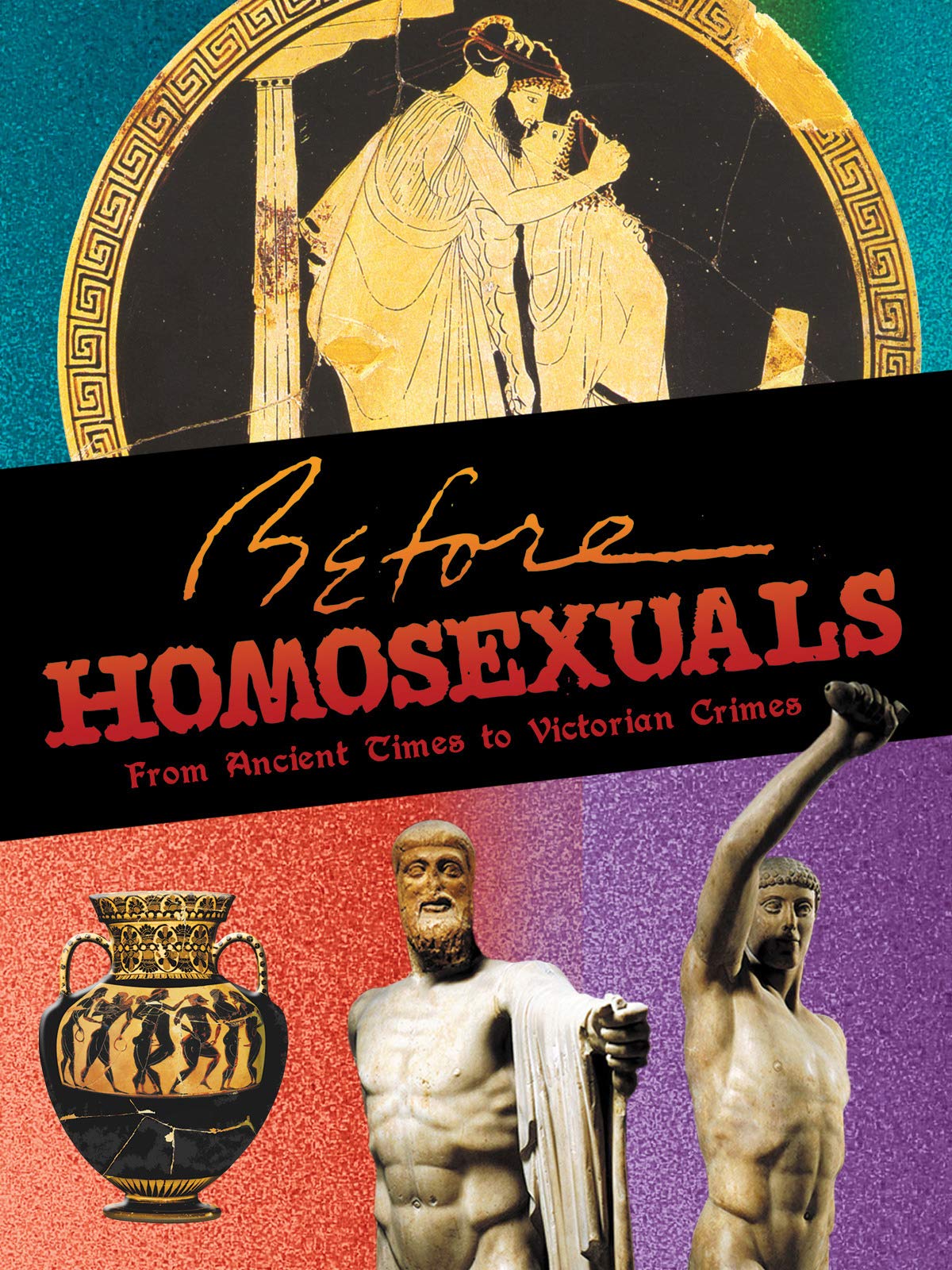
Andrew has finished the recent episode of The White Lotus and he is on the edge of his seat for the next episode (it premieres on Sunday)! Since Andrew just arrived back from New Jersey, he is ready to watch Before Homosexuals, a documentary tracing same-sex desire from antiquity to the Victorian period. He can’t wait to see how this can make its way into his dissertation chapter.

Reading: He’s currently losing himself in Bryant Simon’s Boardwalk of Dreams, and he hopes to get Simon onto the podcast to talk all things Atlantic City. He started listening to Sarah Schulman’s Let the Record Show, while driving back to Long Island, and it’s already really captivating. He can’t believe that he gets to interview Schulman with Erika in a few weeks.

Listening: Andrew is getting his daily comedic relief from the Michelle Collins Sirius XM show (if you have Sirius XM, you need to listen!). And, for music, Andrew is currently obsessing over Natalie Cole and Frank Sinatra’s version of “They Can’t Take That Away From Me.” Have a listen:

A Guest Blog-Post from Lev Raphael:

My Mentor is Always with Me

(Originally published September 3, 2018 by Lev Raphael on his blog.)

The Ivory Tower Boiler Room team is so grateful to be able to bring you a post from this week’s podcast guest, Lev Raphael, who is paying us a second visit to the Boiler Room on Saturday, having last graced us with his conversation in mid-July.

I had dreamed of being a writer since I was in second grade, but it wasn’t until I took my first class with Kristin Lauer at Fordham University that I fell in love with writing itself.

Dr. Lauer was my first and best creative writing teacher and was endlessly inventive in her choice of assignments. But more than that, she was a model for how I would teach when I entered academia years later. She did not believe in pointing out everything that was wrong with your work, in bullying you like a coach, in making you tough because “the world is tough.”

Her approach was to use humor and encouragement. She did her best to work from the inside out of your story or sketch, making you feel like she was communing with it, and with you.

She said to me more than once that I’d publish and win prizes some day if only I wrote something “real.” That was my City of Gold, the mystical goal that I reached with my first publication in a national magazine. It was a story drawing on and transmuting my own life as the son of Holocaust survivors, a story I needed to tell but was afraid to.

She midwifed that story. I would read a bit to her on the phone and she’d comment and then urge me to keep writing and keep calling her. That story won a writing contest judged by Martha Foley, then-editor of the yearly volume The Best American Short Stories, and was published in Redbook. It wouldn’t have lived without Professor Lauer’s dedication, commitment, and teaching genius.

And I wouldn’t have had the career I’ve had or be the widely published author I am today, an author whose literary papers have been purchased by the Michigan State University Libraries.

Whenever I walk into a class or leave one, whenever I work with a student on her writing, my mentor is on my mind: muse, guide, inspiration.

Lev Raphael teaches creative writing online at writewithoutborders.  He’s the author of more than two dozen books in genres from memoir to mystery including a guide to the writing life, Writer’s Block is Bunk.

Thank You for Joining Us!

We will be putting up content from our FIRST in-person event soon, but in the meantime, thank you for all of us at the Ivory Tower Boiler Room, and a special thank-you from Big Cat and Little Cat.

Thank you to everyone who showed up, either in-person or online, and read! If you are interested in writing for us, please get in touch (ivorytowerboilerroom@gmail.com)

Thank you to everyone who just came to listen and support their friends/family!

Thank you to Keryl at Words Matter and the amazing people at the Pitman-based tea-company Oh, You TEAse!

*

*

*

Description: Three identical panels, each depicting a large, good-natured orange cat gazing down at a small grey who is looking out of the frame with an air of weltschmerz.

In the first panel, the large orange says to the small grey: “So, Little Cat, what was your favorite part of attending the Poetry Open-Mic Night at Words Matter?” To which the small Grey Responds: “Where do I start, Big Cat?! I just loved having the opportunity to meet so many poets and hear their amazing work!”

In the second panel, the big orange drops a canny follow-up question: “It was the cookies, wasn’t it?” The little grey doesn’t respond at first.

In the third panel, the little grey sheepishly says: “Getting to meet new people and hear their beautiful poetry was nice, too, though.”

Midweek Teaser: Lev Raphael Shares his Wisdom on Writing, Judaism, Sex, and More…

When Erika started reading Lev Raphael’s work, library catalogues were kept on an early type of computer called a “commodore,” pictured above.

While we can’t take too much time away from bringing you all of the content we want to, we’re going to take a minute and breathe and exchange a few pats on the back and hugs after our first live event(s)–our open mic poetry event both online (via Zoom) and in-person at Words Matter Bookstore in Pitman, New Jersey. We’ll have a more complete report on those, and perhaps even some video for you. It was an exciting night for the entire Boiler Room and our friends, families, loved ones and special guests. 

Meanwhile, we invite you to get comfortable as we bring you more of Erika and Andrew’s conversation with Lev Raphael. The three of them don’t waste any time at all before they get to the good bits, which, in this case, means breaking down the process of writing a sex scene. 

There’s also some celebrity gossip, a detour to the the Gilded Age, then a whiplash-inducing leap forward to Erica Jong, (and if you’re interested in the prurient stuff, stay tuned for more about our own Erika Grumet’s teenage discovery of Erica Jong), followed by some banter about books that have been, or should be, turned into movies. The conversation takes you through an exploration of coming out, intersectional identity, and why we haven’t seen the great explosion of queer literature that we seemed to be teetering on the brink of in the 90s. And we couldn’t bring you a conversation with Lev without talking about Jewish identity. 

Andrew and Erika are grateful for all of the time Lev spent chatting with us and his continued support of our work, and that sense of delight really comes out in the recording. We really look forward to having him visit the Boiler Room again. We’ll have a seat waiting for him.

It’s Party O’Clock in the Ivory Tower Boiler Room!


If just one person believes in you
Deep enough, and strong enough, believes in you

Before you know it, someone else will think
“If he can do it, I can do it”

Typically on a Monday, we bring you a Big Think entry; a piece by one of us that highlights our own relationship with the theme for the month. With so much of our energy focused on the party tomorrow, our Big Think series is taking the week off and will return next Monday. We’ll also feature a more in-depth reflection later this month, but in anticipation of our party tomorrow, we’re taking a moment to gather ourselves and share a little bit of what’s in each of our heads right now. You’ll hear more from us later on, but as we celebrate tomorrow, here are some things you might hear us mention. We hope you’ll be there with us–this community wouldn’t exist without you, and we want you to show up, to share and encourage and to help us honor the work every participant has done.

Andrew tells us, “I am in awe of how many intersectional conversations have happened after one year of creating The Ivory Tower Boiler Room. What started as an idea to begin hosting an academic writing podcast has now expanded to an intersectional Humanities creative collective. Who would have known that asking, on Facebook, “who would like to co-host a graduate student concern podcast” would now lead to creative writers, academics, performers, and literary enthusiasts to come together. I can’t wait to see where we are in another year.”

Andrew’s excitement is infectious–we’re all feeling joy at what we’ve created while remaining aware of the responsibility we have to shaping the future of our community. Community is also the theme in Erika’s head at the moment: “I am grateful for the existence of a space like this…one where collaboration and growth are held up as standards, and where there is great emphasis placed on the value of traditionally undervalued or silenced voices. I was the last of the four to arrive in the Boiler Room, and have struggled with my fears and feelings of inadequacy, partly because everyone else has credentials I lack. I’m trying to slay those demons, and alsoto maintain a focus on growing my skills and looking ahead. The opportunity to blend my social work skills with creative passions is a privilege that I just can’t underestimate, and I hope to draw in more people who are also invested in collaborative growth, mutual support, safer spaces and in amplifying voices. I appreciate my teammates for saying “you’ve got this” as often as they do, but the reality is: “we’ve got this.”

Adam agrees: “I am thankful to The Ivory Tower Boiler Room for helping me to rediscover my love of writing and editing personal essays. What I love about what we do is that we are a website dedicated almost exclusively to poetry and personal essays. In theory that means that anyone could write for us on any topic that is of personal importance to them. And so they are! I have been in writing-meetings with prospective essayists, and I am so excited to show you all the results in the coming weeks. These are people who called me up out of the blue and said: I want to write for ITBR but I don’t know what to write. My answer was, and I hope always will be: let’s find a time to talk and we can figure it out! But maybe this is the marvel unto itself: that I’m excited. When I think back to the early months of the pandemic, I almost have to laugh. My life felt grey and tedious. Writer’s block was a permanent fixture inside my head. I had not so much as met Mary, Erika, Tiffany, Cameron, or any of the other wonderful collaborators. I could fill a page and a half with my gratitude to all of these people, and Andrew perhaps most of all, but I’ll just say: looking back at how far we’ve come makes me want to smile and say ‘thank you’ to everyone: reader, listener, and collaborator alike.”

And Mary perfectly summarizes the general mood: “This past year has been difficult for a lot of people and I feel so lucky that Ivory Tower Boiler Room and my teammates have been the silver lining to all of it. I used to think that writing was a career meant to be done in solitude (which I was ok with) but because of the writing group, my view of writing and how writing is done has completely changed. I’m so excited to see how the Ivory Tower Boiler Room grows in the next year.”

We have so much to be grateful for right now, as we approach our one year celebration. . Andrew and Adam started out trying to build a community supporting other graduate students and early-career academics; they may have been in a familiar ship but they were exploring something unlike anyone alive had faced before. And now, here we sit, with their original mission in our hearts, having watched this project take shape and grow so far beyond and outside the original vision. We are both pleased at what we’ve achieved and deeply aware of the responsibilities we have growing forward. There’s more to say about our reflection on the past year and hopes for the future later this month…right now, we hope you’ll join us on Tuesday for our celebrations so that you can ask us in person more about what the Ivory Tower Boiler Room has meant to us. Until then, let’s put a bookmark in this and we’ll see you all tomorrow!

July Wrap-Up: Teaching, Public Humanities, and Public Scholarship

“I had that familiar conviction that life was beginning over again with the summer.”

In just a few days, the Ivory Tower Boiler Room will be closing the book on our first year of podcasting (and three months of blogging, too)! Over the past year, we’ve gradually come together as a team and created a vision for a community where ideas are exchanged, where support is given, and where we work to ensure that voices are heard. We hope you’ll join us, in person or virtually, on Tuesday to celebrate our anniversary. Before we reflect on a whole year, let’s take a minute and look back on our July highlights. 

Natalie Morse, Ph.D.

With so many things going on here in the Boiler Room, our combined theme of teaching, public humanities, and public scholarship, stretches over two months. The team kicked off the theme with a round table, in which we told some stories about our teachers and some stories we’ve experienced as teachers. We continued our Big Think series with Adam’s entry about what teaching is. It was appropriate that our guest on the podcast that week, to kick off the month, was Dr. Natalie Morse. Andrew and Adam talked with her about whether you should go to grad school. Although our vision has expanded, our roots still keep us tied to helping people navigate the world of academia.

Andrew’s Big Think featured a discussion of public scholarship, of the ways he has stayed inside the traditional boundaries of the academy, while also stretching beyond it. It was an enlightening look into how one early-career academic is dealing with the changes (especially budgetary) the university has been experiencing in the last few decades. On the other side, Erika’s Big Think came from her experiences teaching outside of traditional classrooms, and led to a meditation on how we value educational credentials–M.D., Ph.D., M.S.W., M.A., M.T.A.–do any of these really make you a teacher? And Mary highlighted the humanities this month (the second part of our two-part theme)–what the humanities are, and how they seep into every part of life.

Mary also kept us riveted with the latest installments in her True Crime in Academia, featuring a three part series about the Gainsville Ripper. The abuse Danny Rolling suffered as a child is hard to read about, and we can learn a lot about the impact of trauma from these stories.

Terri Muuss

How we use the humanities to deal with trauma was an important sub-theme this month. Poet Terri Muuss helped us inaugurate our guest-author feature when she shared some of her poetry with us, including a video performance of one of her poems. Take a look at Muuss’s work to see how one poet uses her art to heal from the trauma of sexual assault.

Part of the function of teaching, and, in particular, of teaching the humanities, is that we are giving our students and ourselves the tools to speak out. One of the things we are most proud of doing is giving a platform to voices that are often unheard or silenced. Adam did that for us when he covered the coal miner’s strike in Alabama and the multiple instances of striking workers and their families getting hit by cars.

We are also incredibly proud and grateful to have been able to bring you a two part interview with Dr Helana Darwin about her #MeTooPhD experience. Dr Darwin is a passionate advocate, author and eloquent speaker, and we are honored to help bring her story to the world. In case you missed it, you can hear part 1 of her interview here, and part 2 here.

Erika also led by example when she wrote her essay “The View from the Wheelchair,” about living with disability (and how more-mobile people try to dehumanize people with disabilities).

*

Jesse Green

We took advantage of all the joys and pleasures associated with relaxation and summer to let you peek a little more into who makes up the Boiler Room. Mary shared with us her experience running a (virtual) 5k. Adam reviewed the Netflix TV show Never Have I Ever. And Andrew talked about the Tony Awards and highlighted his own bookshelf with a post about Jesse Green’s work. Nor were Adam’s and Andrew’s articles the only pieces we released that concerned the theater. Jesse Green, chief theater critic of the New York Times, was a guest on an episode of our podcast this month, in which he talked not only about theater but also about his writing process–something the Boiler Room residents always seem interested in.

On a lighter note, Andrew brought us a story about how Edith Wharton’s ghost meddled with his presentation about her unpublished erotica. Edith Wharton and the academic life were again part of the conversation when Andrew and Erika had a chance to talk with author Lev Raphael, and again when Adam and Andrew interviewed Dr. Sheila Liming, Wharton scholar, digital humanities expert, and folk music aficionado.

As always, some of our pieces had no other purpose than to share our love of books and literature with you. Erika helped by carrying over some Pride-themes, and talked about how the library helped her safely find her queer identity. It’s a shock that Erika gets any reading or writing done with monster like this lying in wait to steal her productivity:

Description: Very cute and innocent looking grey cat. Caption: “The moment I want tummy skritchins… you’re done writing for the day.” Photo by Erika Grumet; Text by Adam Katz. The roles of Big Cat and Little Cat are played by Frob and Widget respectively. Frob did not be in this episode because he had an appointment at the vet.

Join us on Tuesday for our birthday celebration, but for today, we’re wrapping up July, and gearing up for our party by putting on our poetry-recitation-shoes. In August, look for us to continue our conversations about public humanities and scholarship, and to bring you more incredible interviews and other features.